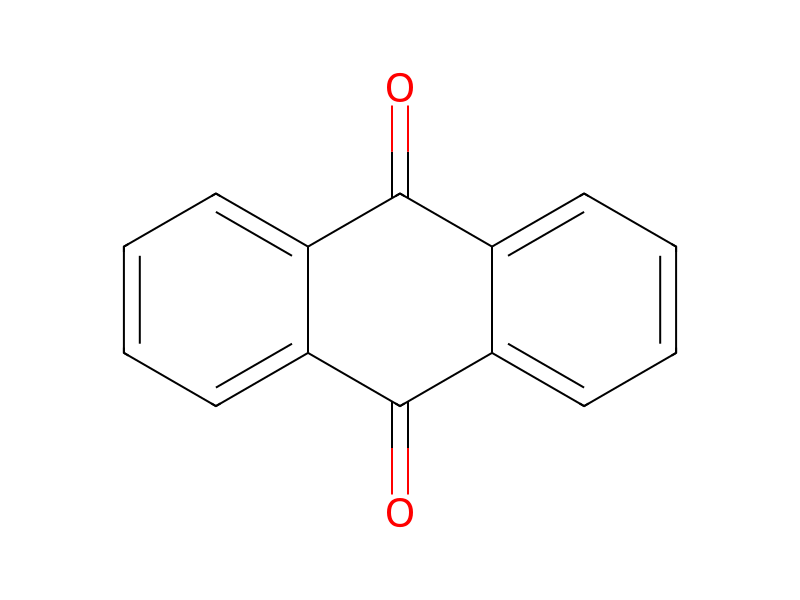
Anthraquinone → 1,8-Diamino-2-bromo-7-butoxy-4,5-dihydroxyanthracene-9,10-dione
HRID 1789319
Reaktionsgleichung

[NH2:1][C:2]1[C:15]2[C:14](=[O:16])[C:13]3[C:8](=[C:9]([OH:19])[CH:10]=[C:11]([Br:18])[C:12]=3[NH2:17])[C:7](=[O:20])[C:6]=2[C:5]([OH:21])=[CH:4][C:3]=1[O:22][C:23]1C=C[CH:26]=[CH:25][CH:24]=1.C1C2C(=O)C3C(=CC=CC=3)C(=O)C=2C=CC=1>>[NH2:1][C:2]1[C:15]2[C:14](=[O:16])[C:13]3[C:8](=[C:9]([OH:19])[CH:10]=[C:11]([Br:18])[C:12]=3[NH2:17])[C:7](=[O:20])[C:6]=2[C:5]([OH:21])=[CH:4][C:3]=1[O:22][CH2:23][CH2:24][CH2:25][CH3:26]Komponenten
3


Versuchsvorschrift
When 5.5 of 1,8-diamino-4,5-dihydroxy-2-phenoxy-7-bromoanthraquinone (preparation see Example 417a) are used in Example 338a instead of the anthraquinone component mentioned there, then 4.5 g, corresponding to 85% of theory, of 1,8-diamino-4,5-dihydroxy-2-n-butoxy-7-bromoanthraquinone are obtained quite correspondingly, the colour shade of which on silica gel is a blue with the Indicator Number 14.
Quellen und Nachweise
- ORD-Eintrag