StartseiteMCPWorkbenchSkills
StartseiteWorkbenchBenachrichtigungenMein Bereich
llms.txt · MCP-AnleitungDatenschutz · Nutzungsbedingungen · Supportv1.8.3
  1. Startseite
  2. /Reaktion

Hydrochloric Acid → 5-(4-Chloro-3-methylphenyl)-4-isoxazolylmethanol

HRID 1794334
Drucken

Reaktionsgleichung

Reaktionsgleichung von HRID 1794334
[Cl:1][C:2]1[CH:7]=[CH:6][C:5]([C:8]2[O:12][N:11]=[CH:10][C:9]=2[C:13](OCC)=[O:14])=[CH:4][C:3]=1[CH3:18].[H-].C([Al+]CC(C)C)C(C)C.Cl>O1CCCC1>[Cl:1][C:2]1[CH:7]=[CH:6][C:5]([C:8]2[O:12][N:11]=[CH:10][C:9]=2[CH2:13][OH:14])=[CH:4][C:3]=1[CH3:18]
KomponentenVersuchsvorschriftAufarbeitungQuellen und NachweiseNotizen zur Reaktion

Komponenten

5

Edukt 3

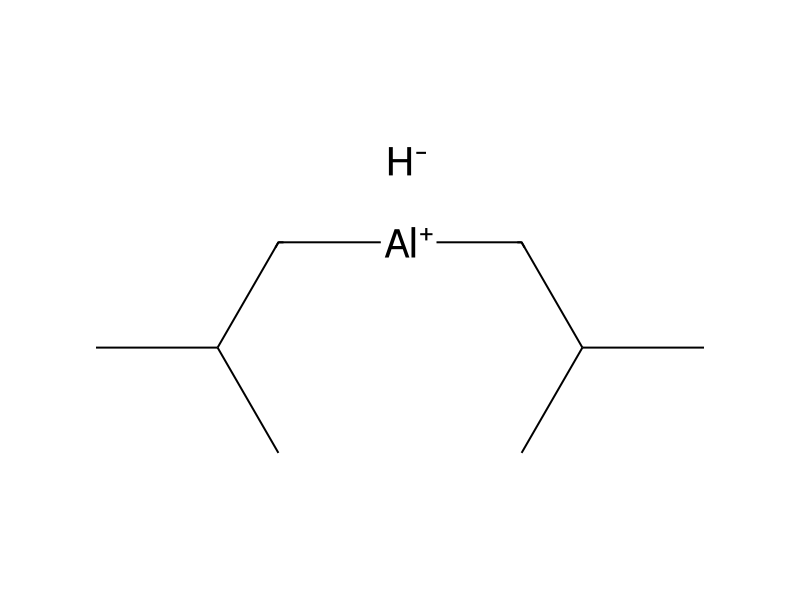
HCID 313Hydrochloric AcidHCID 21225700DiisobutylaluminumhydrideHCID 22221423HCID 22221423, Verbindung

Produkt 1

HCID 222214055-(4-Chloro-3-methylphenyl)-4-isoxazolylmethanolAusbeute 86 %

Reagenzien, Katalysatoren, Lösungsmittel 1

HCID 8028TetrahydrofuranLösungsmittel

Versuchsvorschrift

To a solution of ethyl 5-(4-chloro-3-methylphenyl)isoxazole-4-carboxylate (8.50 g) in tetrahydrofuran (100 ml) was gently added diisobutylaluminum hydride (1.5 M toluene solution, 47 ml) at 0° C., and the mixture was stirred at room temperature for 1 hr. The reaction mixture was poured into dilute hydrochloric acid, and the mixture was extracted with ethyl acetate. The ethyl acetate layer was washed with saturated brine, dried (MgSO4) and concentrated to give 5-(4-chloro-3-methylphenyl)-4-isoxazolylmethanol (6.13 g, yield 86%) as colorless crystals, which were recrystallized from ethyl acetate-hexane to give a colorless needle. melting point: 92–93° C.

Aufarbeitung

  1. customat 0° C.
  2. extractionthe mixture was extracted with ethyl acetate
  3. washThe ethyl acetate layer was washed with saturated brine
  4. dry with materialdried (MgSO4)
  5. concentrationconcentrated

Quellen und Nachweise

ORD-Eintrag
ord-6989769f54394e8ea0c9066c374cf5fa
Quelldatensatz
uspto-grants-2006_04
DOI
10.6084/m9.figshare.5104873.v1
Patentnummer
US07022725B2

Notizen zur Reaktion

Auf dieser SeiteKomponentenVersuchsvorschriftAufarbeitungQuellen und NachweiseNotizen zur Reaktion