Reaktionsgleichung
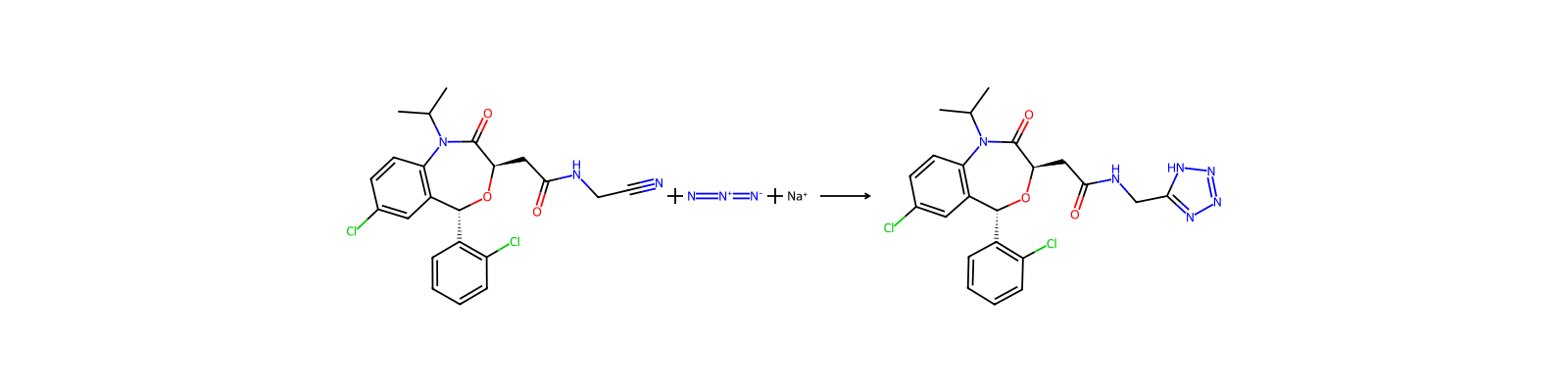
[Cl:1][C:2]1[CH:3]=[CH:4][C:5]2[N:11]([CH:12]([CH3:14])[CH3:13])[C:10](=[O:15])[C@@H:9]([CH2:16][C:17]([NH:19][CH2:20][C:21]#[N:22])=[O:18])[O:8][C@H:7]([C:23]3[CH:28]=[CH:27][CH:26]=[CH:25][C:24]=3[Cl:29])[C:6]=2[CH:30]=1.[N-:31]=[N+:32]=[N-:33].[Na+]>>[Cl:1][C:2]1[CH:3]=[CH:4][C:5]2[N:11]([CH:12]([CH3:14])[CH3:13])[C:10](=[O:15])[C@@H:9]([CH2:16][C:17]([NH:19][CH2:20][C:21]3[NH:33][N:32]=[N:31][N:22]=3)=[O:18])[O:8][C@H:7]([C:23]3[CH:28]=[CH:27][CH:26]=[CH:25][C:24]=3[Cl:29])[C:6]=2[CH:30]=1Komponenten
3

Versuchsvorschrift
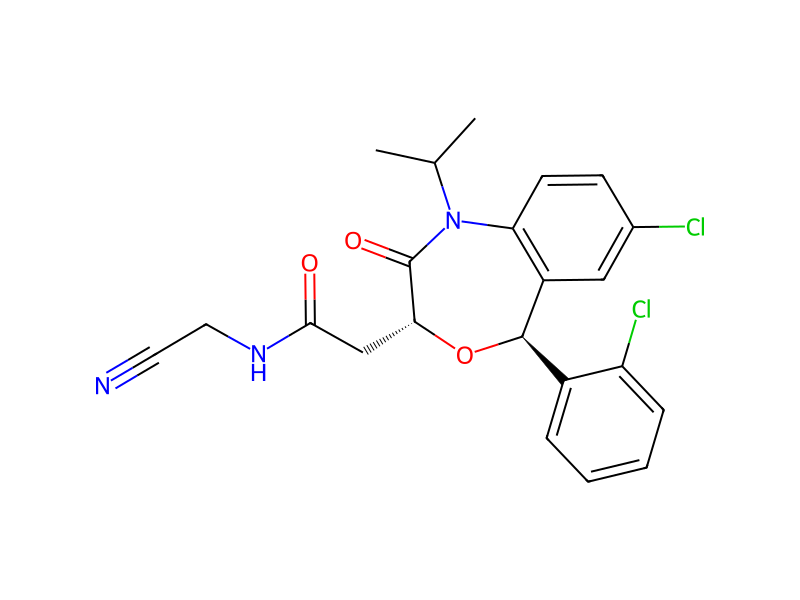
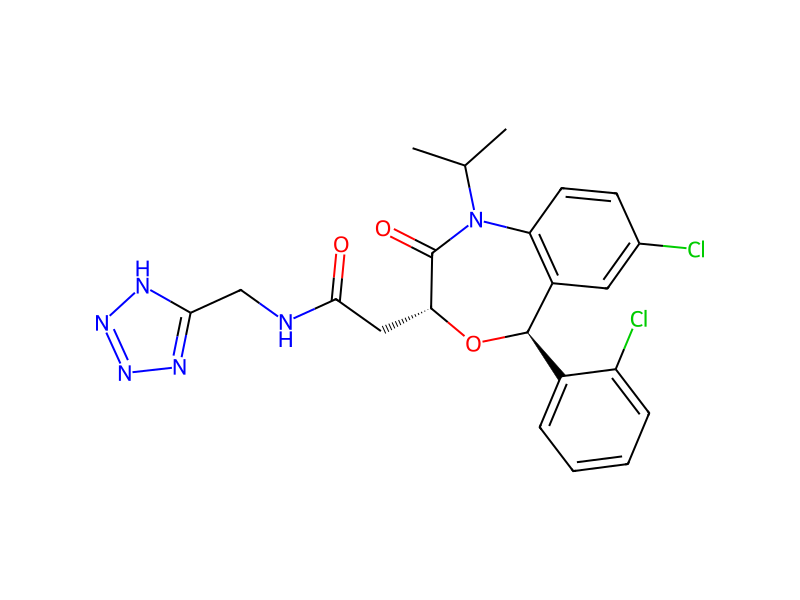
Trans-7-chloro-5-(2-chlorophenyl)-3-(cyanomethylaminocarbonylmethyl)-1-isopropyl-2-oxo-1,2,3,5-tetrahydro-4,1-benzoxazepine and sodium azide were subjected to the same procedure as in Example 102 to yield a crystal.
Aufarbeitung
- customto yield a crystal
Quellen und Nachweise
- ORD-Eintrag
- ord-450e99beb381497883ffdb50182f2603
- Quelldatensatz
- uspto-grants-1998_03
- Patentnummer
- US05726306
Verknüpfte Notizen
Wird geladen…