StartseiteMCPWorkbenchSkills
StartseiteWorkbenchBenachrichtigungenMein Bereich
llms.txt · MCP-AnleitungDatenschutz · Nutzungsbedingungen · Supportv1.8.3
  1. Startseite
  2. /Reaktion

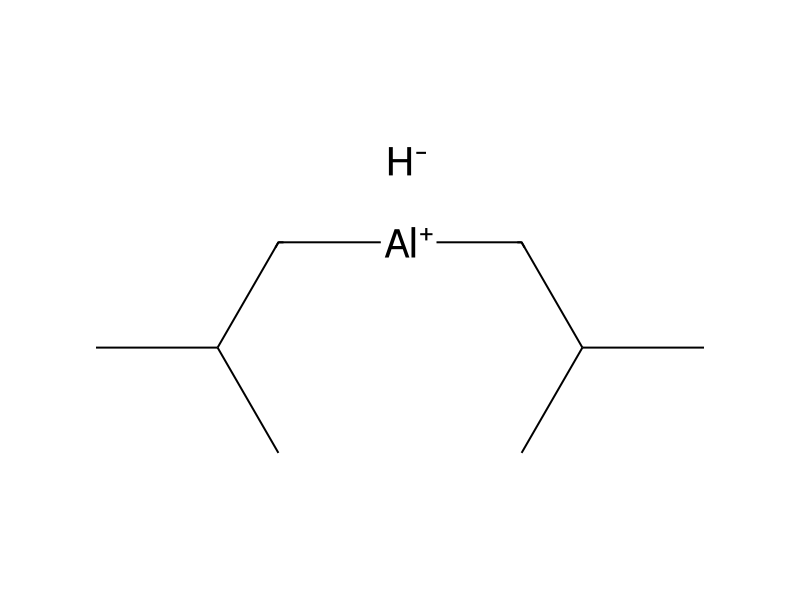
Diisobutylaluminumhydride → HCID 86649913, Verbindung

HRID 1803157
Drucken

Reaktionsgleichung

Reaktionsgleichung von HRID 1803157
[H-].C([Al+]CC(C)C)C(C)C.[CH3:11][O:12][C:13]1[CH:18]=[C:17]([N+:19]([O-:21])=[O:20])[CH:16]=[CH:15][C:14]=1[N:22]1[CH:26]=[C:25]([C:27](OCC)=[O:28])[N:24]=[CH:23]1>>[CH3:11][O:12][C:13]1[CH:18]=[C:17]([N+:19]([O-:21])=[O:20])[CH:16]=[CH:15][C:14]=1[N:22]1[CH:26]=[C:25]([CH:27]=[O:28])[N:24]=[CH:23]1
KomponentenVersuchsvorschriftAufarbeitungQuellen und NachweiseNotizen zur Reaktion

Komponenten

3

Edukt 2

HCID 21225700DiisobutylaluminumhydrideHCID 66858320ethyl 1-(2-methoxy-4-nitrophenyl)-1H-imidazole-4-carboxylate

Produkt 1

HCID 86649913HCID 86649913, VerbindungAusbeute 59 %

Versuchsvorschrift

Step N (2): Diisobutylaluminum hydride (1 M in toluene, 17.2 mL, 17.1 mmol) was added to a −78° C. solution of ethyl 1-(2-methoxy-4-nitrophenyl)-1H-imidazole-4-carboxylate (2.0 g, 6.9 mmol). After 30 min, the reaction mixture was quenched with 1 N HCl. The mixture was diluted with water and extracted with EtOAc. The organic layer was washed with brine, dried over sodium sulfate, filtered, and concentrated in vacuo. The crude residue was purified using silica gel column chromatography (EtOAc/hexane) to afford 1-(2-methoxy-4-nitrophenyl)-1H-imidazole-4-carbaldehyde (1.0 g, 59% yield).

Aufarbeitung

  1. customthe reaction mixture was quenched with 1 N HCl
  2. additionThe mixture was diluted with water
  3. extractionextracted with EtOAc
  4. washThe organic layer was washed with brine
  5. dry with materialdried over sodium sulfate
  6. filtrationfiltered
  7. concentrationconcentrated in vacuo
  8. customThe crude residue was purified

Quellen und Nachweise

ORD-Eintrag
ord-7b8120083e8a4af2b464dc671a841536
Quelldatensatz
uspto-grants-2013_01
DOI
10.6084/m9.figshare.5104873.v1
Patentnummer
US08349880B2

Notizen zur Reaktion

Auf dieser SeiteKomponentenVersuchsvorschriftAufarbeitungQuellen und NachweiseNotizen zur Reaktion