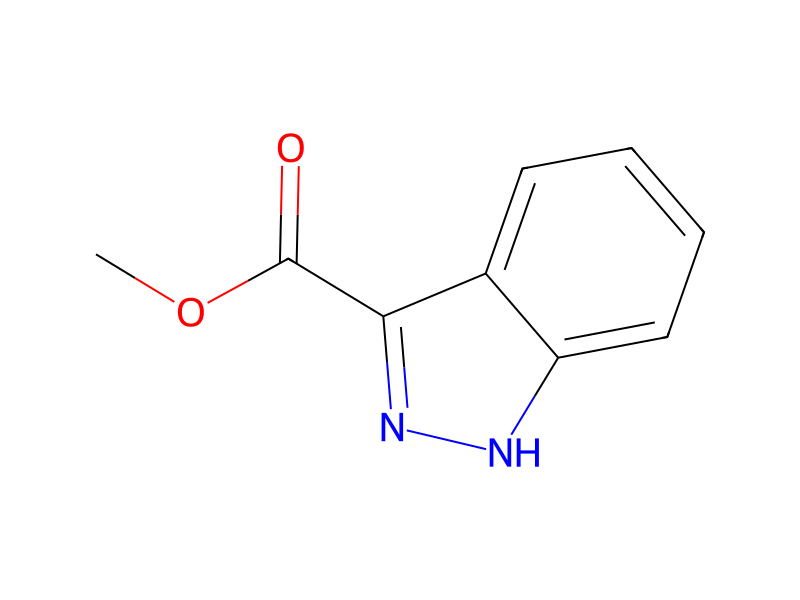
[NH:1]1[C:9]2[C:4](=[CH:5][CH:6]=[CH:7][CH:8]=2)[C:3]([C:10]([O:12][CH3:13])=[O:11])=[N:2]1.[Cl:14][C:15]1[CH:22]=[C:21]([Cl:23])[CH:20]=[CH:19][C:16]=1[CH2:17]Cl.C([O-])([O-])=O.[K+].[K+]>CC(C)=O.C(Cl)Cl>[CH3:13][O:12][C:10]([C:3]1[C:4]2[C:9](=[CH:8][CH:7]=[CH:6][CH:5]=2)[N:1]([CH2:17][C:16]2[CH:19]=[CH:20][C:21]([Cl:23])=[CH:22][C:15]=2[Cl:14])[N:2]=1)=[O:11]Next, a mixture of methyl indazole-3-carboxylate (2.05 g, 11.4 mmol), 2,4-dichlorobenzyl chloride (3.35 mL, 12.54 mml), and K2CO3 (7.0 g, 50 mmol) in acetone (22 mL) was refluxed overnight at a temperature of 70° C. The reaction mixture was cooled to room temperature, filtered, and the residue was washed with acetone. The combined filtrate was concentrated under vacuum (rotovapor). The solid thus obtained was dissolved in CH2Cl2 and filtered to remove any undissolved solid. The solution was then concentrated, diluted with hexane and left in the refrigerator overnight. The precipitated solid was then filtered, washed with a mixture of hexane/ethyl acetate (9:1) to yield the pure product as a white solid. Yield=3.5 g (89%); m.p.=144°-146° C.; 1H NMR (400 MHz, CDCl3) δ 8.31 (d, J=8.8 Hz, 1H), 7.39-7.47 (m, 4H), 7.12 (d, J=8.8 Hz, 1H), 6.71 (d, J=8.8 Hz, 1H), 5.81 (s, 2H), 4.11 (s, 3H).