StartseiteMCPWorkbenchSkills
StartseiteWorkbenchBenachrichtigungenMein Bereich
llms.txt · MCP-AnleitungDatenschutz · Nutzungsbedingungen · Supportv1.8.3
  1. Startseite
  2. /Reaktion

Potassium Carbonate → 1,4-Difluoro-2-nitro-5-propoxybenzene

HRID 1811548
Drucken

Reaktionsgleichung

Reaktionsgleichung von HRID 1811548
[F:1][C:2]1[CH:7]=[C:6]([N+:8]([O-:10])=[O:9])[C:5]([F:11])=[CH:4][C:3]=1[OH:12].C(=O)([O-])[O-].[K+].[K+].I[CH2:20][CH2:21][CH3:22]>C(#N)C>[F:11][C:5]1[CH:4]=[C:3]([O:12][CH2:20][CH2:21][CH3:22])[C:2]([F:1])=[CH:7][C:6]=1[N+:8]([O-:10])=[O:9]
KomponentenReaktionsbedingungenVersuchsvorschriftAufarbeitungQuellen und NachweiseNotizen zur Reaktion

Komponenten

5

Edukt 3

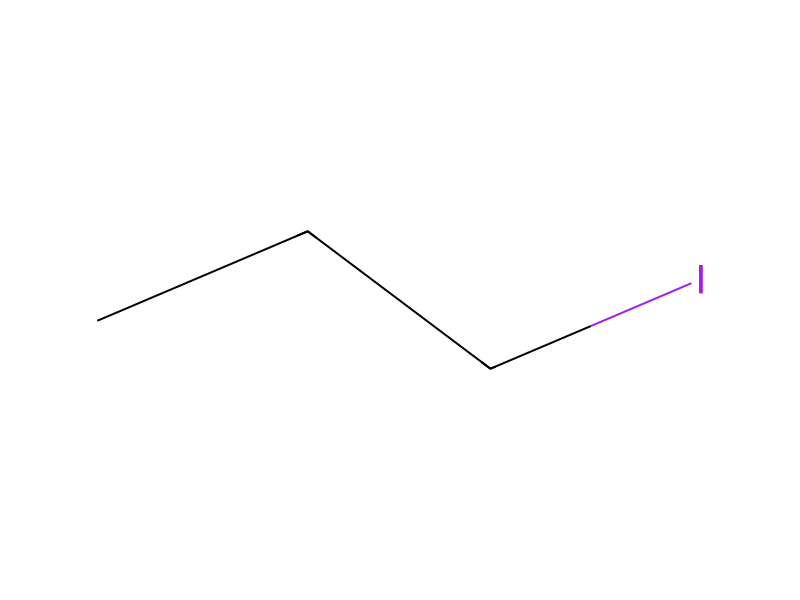
HCID 11430Potassium CarbonateHCID 336431-IodopropaneHCID 27824902,5-Difluoro-4-nitrophenol

Produkt 1

HCID 685663551,4-Difluoro-2-nitro-5-propoxybenzeneAusbeute 47 %

Reagenzien, Katalysatoren, Lösungsmittel 1

HCID 6342AcetonitrileLösungsmittel

Reaktionsbedingungen

Temperatur
60 °C

Versuchsvorschrift

To a solution of 2,5-difluoro-4-nitro-phenol (1.71 g, 9.77 mmol) in acetonitrile (20 mL), potassium carbonate (2.7 g, 19.5 mmol) and 1-iodopropane (1.14 mL, 11.7 mmol) were added. After stirring at 60° C. for 15 hours, mixture was concentrated and extracted with methylene chloride and 2M NaOH solution. Organic phases were dried over magnesium sulfate, filtered, and concentrated to give 1,4-difluoro-2-nitro-5-propoxy-benzene as a yellow solid (0.995 g, 47%). 1HNMR (CDCl3, 400 MHz) δ 7.92-7.88 (m, 1H), 6.83-6.78 (m, 1H), 4.08-4.05 (t, J=6.5 Hz, 2H), 1.95-1.86 (m, 2H), 1.10-1.06 (t, J=7.4 Hz, 2H).

Aufarbeitung

  1. concentrationmixture was concentrated
  2. extractionextracted with methylene chloride and 2M NaOH solution
  3. dry with materialOrganic phases were dried over magnesium sulfate
  4. filtrationfiltered
  5. concentrationconcentrated

Quellen und Nachweise

ORD-Eintrag
ord-0fb40bbc96714c8181cd2d8623ade33a
Quelldatensatz
uspto-grants-2013_01
DOI
10.6084/m9.figshare.5104873.v1
Patentnummer
US08362248B2

Notizen zur Reaktion

Auf dieser SeiteKomponentenReaktionsbedingungenVersuchsvorschriftAufarbeitungQuellen und NachweiseNotizen zur Reaktion