StartseiteMCPWorkbenchSkills
StartseiteWorkbenchBenachrichtigungenMein Bereich
llms.txt · MCP-AnleitungDatenschutz · Nutzungsbedingungen · Supportv1.8.3
  1. Startseite
  2. /Reaktion

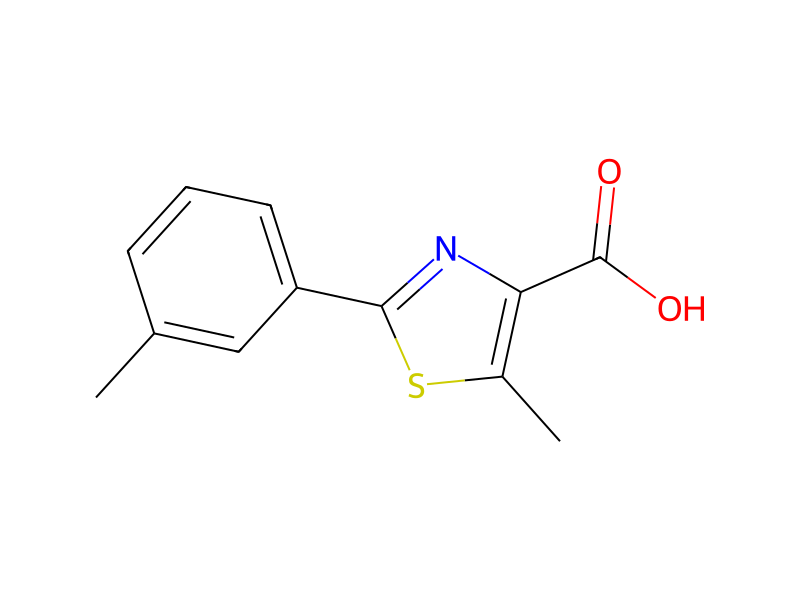
Hydrochloric Acid → 2-(3-Methylphenyl)-5-methyl-1,3-thiazole-4-carboxylic acid

HRID 1816629
Drucken

Reaktionsgleichung

Reaktionsgleichung von HRID 1816629
[CH3:1][C:2]1[CH:3]=[C:4]([C:8]2[S:9][C:10]([CH3:17])=[C:11]([C:13]([O:15]C)=[O:14])[N:12]=2)[CH:5]=[CH:6][CH:7]=1.[OH-].[Na+].Cl>CO>[CH3:1][C:2]1[CH:3]=[C:4]([C:8]2[S:9][C:10]([CH3:17])=[C:11]([C:13]([OH:15])=[O:14])[N:12]=2)[CH:5]=[CH:6][CH:7]=1
KomponentenVersuchsvorschriftAufarbeitungQuellen und NachweiseNotizen zur Reaktion

Komponenten

5

Edukt 3

HCID 313Hydrochloric AcidHCID 14798Sodium HydroxideHCID 22494233Methyl 2-(3-methylphenyl)-5-methyl-1,3-thiazole-4-carboxylate

Produkt 1

HCID 224942712-(3-Methylphenyl)-5-methyl-1,3-thiazole-4-carboxylic acidAusbeute 106 %

Reagenzien, Katalysatoren, Lösungsmittel 1

HCID 887MethanolLösungsmittel

Versuchsvorschrift

0.2 g of methyl 2-(3-methylphenyl)-5-methyl-1,3-thiazole-4-carboxylate was dissolved in 10 ml methanol, 1 ml of 5N sodium hydroxide was added, and the mixture was heated under reflux for 1 hour. The reaction solution was ice-cooled and neutralized with 2N hydrochloric acid, followed by extracting with ethyl acetate. The organic layer was washed with brine, dried over anhydrous magnesium sulfate and evaporated, to give 0.2 g of 2-(3-methylphenyl)-5-methyl-1,3-thiazole-4-carboxylic acid.

Aufarbeitung

  1. temperaturethe mixture was heated
  2. temperatureunder reflux for 1 hour
  3. temperaturecooled
  4. extractionby extracting with ethyl acetate
  5. washThe organic layer was washed with brine
  6. dry with materialdried over anhydrous magnesium sulfate
  7. customevaporated

Quellen und Nachweise

ORD-Eintrag
ord-6d52dc9521eb40719a0ddea0b6e011ed
Quelldatensatz
uspto-grants-2005_04
DOI
10.6084/m9.figshare.5104873.v1
Patentnummer
US06884821B1

Notizen zur Reaktion

Auf dieser SeiteKomponentenVersuchsvorschriftAufarbeitungQuellen und NachweiseNotizen zur Reaktion