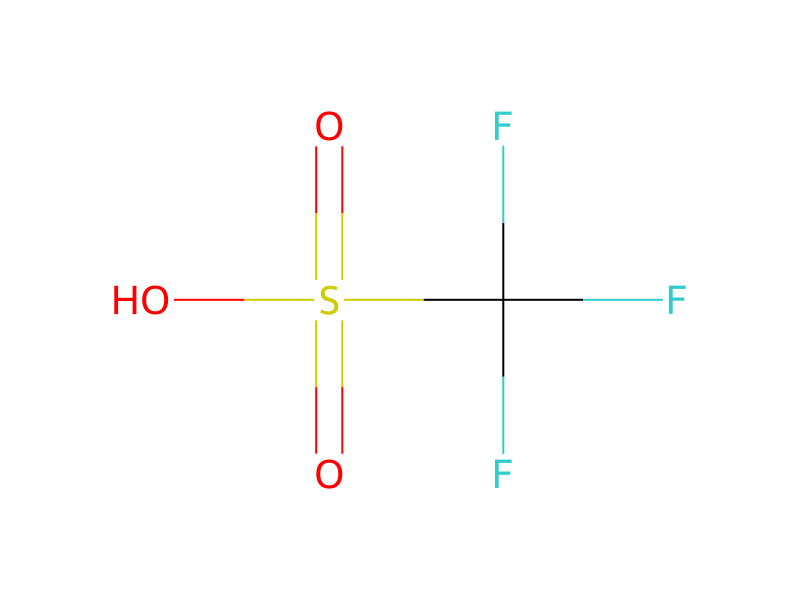
ClC(Cl)(Cl)C(=N)O[CH2:5][C:6]1[CH:11]=[C:10]([F:12])[C:9]([Br:13])=[CH:8][C:7]=1[Cl:14].[F:18][C:19]1([F:27])[CH2:24][CH2:23][C:22]([CH3:26])([OH:25])[CH2:21][CH2:20]1>C(Cl)Cl.C1CCCCC1.FC(F)(F)S(O)(=O)=O>[Br:13][C:9]1[CH:8]=[C:7]([Cl:14])[C:6]([CH2:5][O:25][C:22]2([CH3:26])[CH2:23][CH2:24][C:19]([F:27])([F:18])[CH2:20][CH2:21]2)=[CH:11][C:10]=1[F:12]To a solution of 4-bromo-2-chloro-5-fluorobenzyl 2,2,2-trichloroacetimidate (4.00 g, 10.40 mmol) and 4,4-difluoro-1-methylcyclohexanol (1.21 g, 8.05 mmol) in methylene chloride (50 mL) and cyclohexane (25 mL) was added trifluoromethanesulfonic acid (0.1 mL, 0.14 mmol) at 0 ?C. The reaction mixture was stirred for 56 hours at ambient temperature and quenched by addition of saturated sodium bicarbonate solution (10 mL), and then diluted with methylene chloride (100 mL). The organic layer was separated and washed with brine; dried over anhydrous sodium sulfate and concentrated in vacuo. Purification of the residue by column chromatography (5% ethyl acetate in hexanes) and recrystallization from methanol afforded the title compound (0.54 g, 17%) as a colorless solid: 1H NMR (300 MHz, CDCl3) δ 7.51 (d, J=6.0 Hz, 1H), 7.30 (d, J=9.3 Hz, 1H), 4.37 (s, 2H), 2.11-1.86 (m, 6H), 1.72-1.59 (m, 2H), 1.26 (s, 3H).