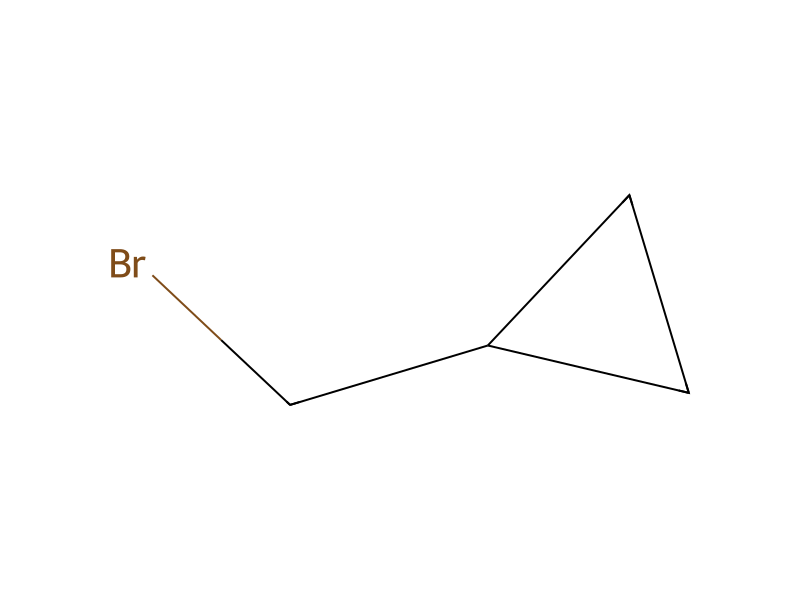
To a solution of 1-chloro-7-fluoro-4-hydroxyisoquinoline (1.0 g, 5.06 mmol) in acetonitrile (10 ml) was added K2CO3 (2 g, 15.18 mmol) followed by cyclopropylmethylbromide (1.36 g, 10.12 mmol) at room temperature. The reaction mixture was heated to 50° C. for 2 hr. Solvent was evaporated under reduced pressure and the residue was diluted with water and extracted with ethyl acetate. The combined organic layer was dried over anhydrous Na2SO4 and evaporated under reduced pressure to get crude compound. The crude compound was purified by silica gel chromatography to get 1-chloro-4-ethoxyisoquinoline (0.7 g, 55%) as pale yellow solid. 1H NMR (400 MHz, CDCl3): δ ppm 8.38-8.34 (q, J=8 Hz, 1H), 7.89-7.86 (d, J=12 Hz, 1H), 7.81 (s, 1H), 7.65 (t, J=10 Hz, 1H), 4.11-4.09 (d, J=8 Hz, 2H), 1.43-1.37 (m, 1H), 0.72-0.67 (m, 2H), 0.46-0.39 (m, 2H); MS: MS m/z 252.0 (M++1).