StartseiteMCPWorkbenchSkills
StartseiteWorkbenchBenachrichtigungenMein Bereich
llms.txt · MCP-AnleitungDatenschutz · Nutzungsbedingungen · Supportv1.8.3
  1. Startseite
  2. /Reaktion

Tributylvinyltin → 3-bromo-4-[(2,4-difluorobenzyl)oxy]-1-(2,6-difluorophenyl)-6-methyl-5-vinylpyridin-2(1H)-one

HRID 1867105
Drucken

Reaktionsgleichung

Reaktionsgleichung von HRID 1867105
[Br:1][C:2]1[C:3](=[O:28])[N:4]([C:20]2[C:25]([F:26])=[CH:24][CH:23]=[CH:22][C:21]=2[F:27])[C:5]([CH3:19])=[C:6](I)[C:7]=1[O:8][CH2:9][C:10]1[CH:15]=[CH:14][C:13]([F:16])=[CH:12][C:11]=1[F:17].[CH2:29]([Sn](CCCC)(CCCC)C=C)[CH2:30]CC.C(#N)C.O>C1COCC1.C1C=CC([P]([Pd]([P](C2C=CC=CC=2)(C2C=CC=CC=2)C2C=CC=CC=2)([P](C2C=CC=CC=2)(C2C=CC=CC=2)C2C=CC=CC=2)[P](C2C=CC=CC=2)(C2C=CC=CC=2)C2C=CC=CC=2)(C2C=CC=CC=2)C2C=CC=CC=2)=CC=1>[Br:1][C:2]1[C:3](=[O:28])[N:4]([C:20]2[C:25]([F:26])=[CH:24][CH:23]=[CH:22][C:21]=2[F:27])[C:5]([CH3:19])=[C:6]([CH:29]=[CH2:30])[C:7]=1[O:8][CH2:9][C:10]1[CH:15]=[CH:14][C:13]([F:16])=[CH:12][C:11]=1[F:17]
KomponentenReaktionsbedingungenVersuchsvorschriftAufarbeitungQuellen und NachweiseNotizen zur Reaktion

Komponenten

6

Edukt 3

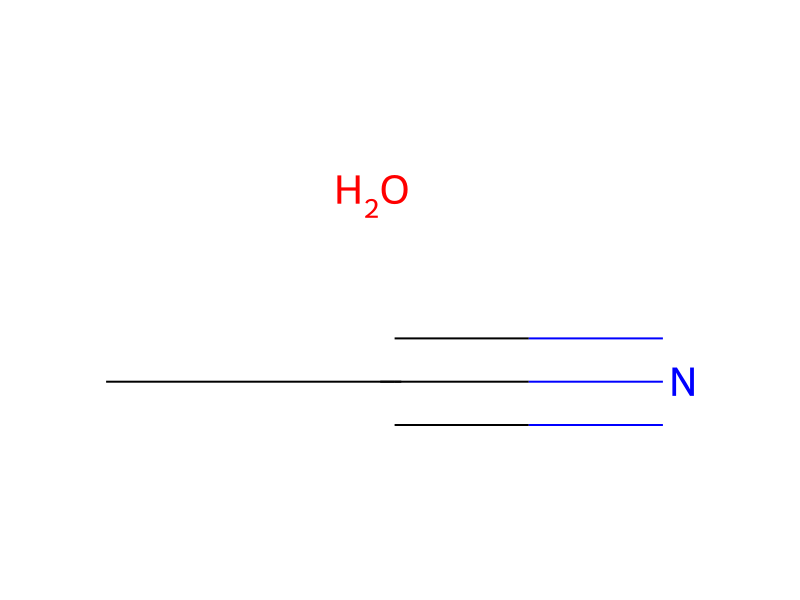
HCID 81998TributylvinyltinHCID 18373917Acetonitrile--water (1/1)HCID 220499923-Bromo-4-[(2,4-difluorobenzyl)oxy]-1-(2,6-difluorophenyl)-5-iodo-6-methylpyridin-2(1H)-one

Produkt 1

HCID 220501993-bromo-4-[(2,4-difluorobenzyl)oxy]-1-(2,6-difluorophenyl)-6-methyl-5-vinylpyridin-2(1H)-one

Reagenzien, Katalysatoren, Lösungsmittel 2

HCID 178418397
HCID 178418397, Verbindung
Katalysator
HCID 8028TetrahydrofuranLösungsmittel

Reaktionsbedingungen

Temperatur
68 °C

Versuchsvorschrift

To a room temperature solution of 3-bromo-4-[(2,4-difluorobenzyl)oxy]-1-(2,6-difluorophenyl)-5-iodo-6-methylpyridin-2(1H)-one (1.00 g, 1.76 mmol) in anhydrous THF (12 mL) was added, sequentially, tributyl(vinyl)tin (1.21 g, 3.81 mmol) and tetrakis(triphenylphosphine)palladium (236 mg, 0.204 mmol) under an argon stream. The reaction vessel was then equipped with a reflux condenser and the reaction system purged with an argon flow. The resulting yellow solution was heated to 68° C. and stirred under a positive pressure of argon for 12.0 hours until complete disappearance of starting material by LCMS analysis. The reaction mixture was concentrated in vacuo and the resulting dark residue was subjected to SiO2 chromatography with ethyl acetate/hexanes (3:7) to furnish a reddish solid. 1H NMR (400 MHz, CDCl3) δ 7.62 (app q, J=7.8 Hz, 1H), 7.45 (app tt, J=8.4, 6.2, 1H), 7.09 (app t, J=8.8 Hz, 2H), 6.90 (app t, J=8.0 Hz, 1H), 6.83 (app dt, J=6.8, 2.5 Hz, 1H), 6.51 (dd, J=17.7, 11.4 Hz, 1H), 5.53 (dd, J=11.4, 1.5 Hz, 1H), 5.41 (dd, J=17.8, 1.5 Hz, 1H), 5.09 (br s, 2H), 2.09 (s, 3H); LC/MS C-18 column, tr=3.20 minutes (5 to 95% acetonitrile/water over 5 minutes at 1 ml/min with detection 254 nm, at 50° C.). ES-MS m/z 468 (M+H). ES-HRMS m/z 468.0210 (M+H calcd for C21H15BrF4NO2 requires 468.0217).

Aufarbeitung

  1. customThe reaction vessel was then equipped with a reflux condenser
  2. customthe reaction system purged with an argon flow
  3. concentrationThe reaction mixture was concentrated in vacuo
  4. customto furnish a reddish solid

Quellen und Nachweise

ORD-Eintrag
ord-4d4290aa1c9545bd99c4abc6f43cb219
Quelldatensatz
uspto-grants-2009_12
DOI
10.6084/m9.figshare.5104873.v1
Patentnummer
US07629363B2

Notizen zur Reaktion

Auf dieser SeiteKomponentenReaktionsbedingungenVersuchsvorschriftAufarbeitungQuellen und NachweiseNotizen zur Reaktion