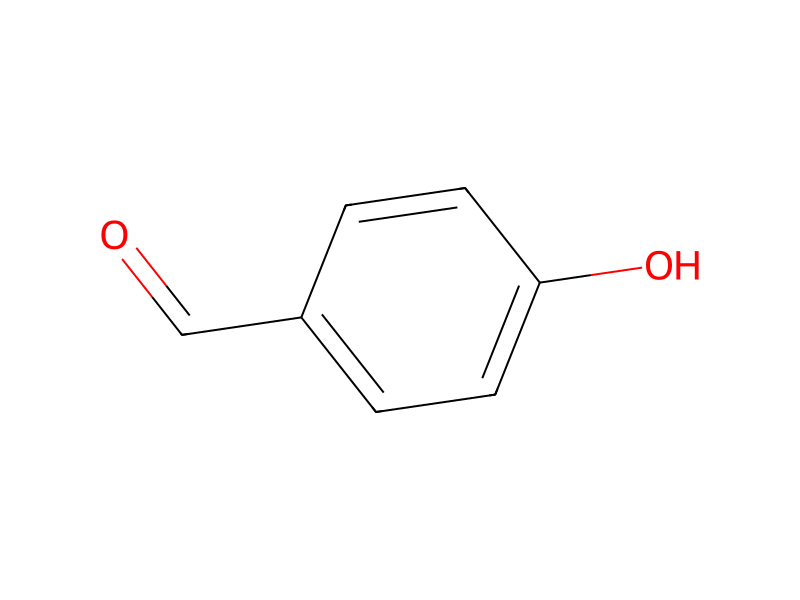
[F:1][C:2]1[CH:3]=[C:4]([CH:8]2[CH2:10][O:9]2)[CH:5]=[CH:6][CH:7]=1.[OH:11][C:12]1[CH:19]=[CH:18][C:15]([CH:16]=[O:17])=[CH:14][CH:13]=1.[OH-].[Na+]>C1(C)C=CC=CC=1>[F:1][C:2]1[CH:3]=[C:4]([CH:8]([OH:9])[CH2:10][O:11][C:12]2[CH:19]=[CH:18][C:15]([CH:16]=[O:17])=[CH:14][CH:13]=2)[CH:5]=[CH:6][CH:7]=1To a stirring solution of 2-(3-fluorophenyl)oxirane (5.60 g, 40.5 mmol) in toluene (65 ml) was added 4-hydroxybenzaldehyde (7.40 g, 61.0 mmol), 1M NaOH (65 ml) and PEG4000 (polyethylene glycol, 0.85 g) and the stirring mixture was heated at 78° C. overnight. The reaction mixture was allowed to cool to RT and then extracted with EtOAc (2×150 ml). The combined extracts were washed with brine, dried (Na2SO4), filtered and evaporated in vacuo. The resulting light brown oil was chromatographed eluting with 30-40% EtOAc/hexanes. There are 2 major spots. Fractions containing the higher Rf spot were combined and evaporated in vacuo to give 1.78 g (17%) of the title compound as a white solid. Fractions containing the lower Rf spot were combined and evaporated in vacuo to give 0.90 g (9%) of the regioisomer as a nearly colorless oil.