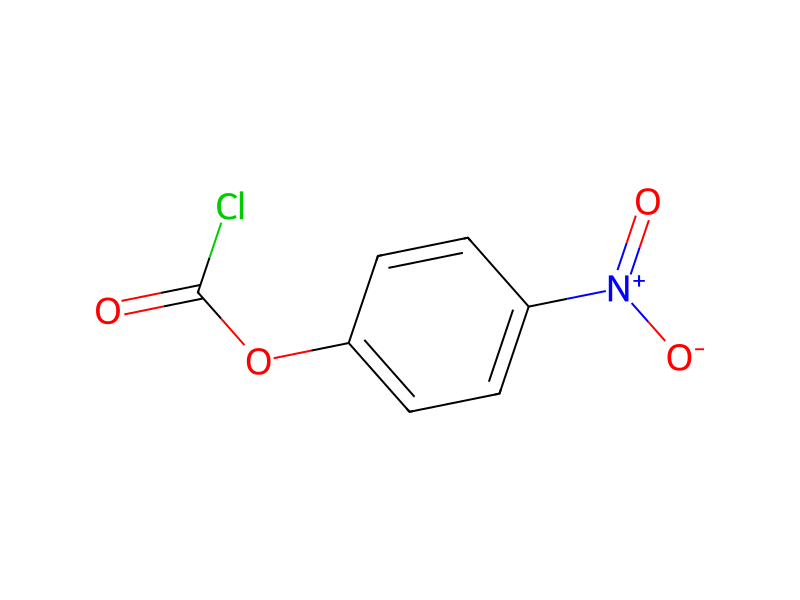
[F:1][C:2]([F:14])([F:13])[C:3]1[CH:8]=[CH:7][C:6]([S:9][CH2:10][CH2:11][OH:12])=[CH:5][CH:4]=1.N1C=CC=CC=1.Cl[C:22]([O:24][C:25]1[CH:30]=[CH:29][C:28]([N+:31]([O-:33])=[O:32])=[CH:27][CH:26]=1)=[O:23]>C(Cl)Cl>[F:14][C:2]([F:13])([F:1])[C:3]1[CH:8]=[CH:7][C:6]([S:9][CH2:10][CH2:11][O:12][C:22](=[O:23])[O:24][C:25]2[CH:26]=[CH:27][C:28]([N+:31]([O-:33])=[O:32])=[CH:29][CH:30]=2)=[CH:5][CH:4]=12-(4-Trifluoromethyl-phenylsulfanyl)ethanol (15.00 g, 67.50 mmol) prepared in the above Step (1) was dissolved in anhydrous DCM (100 ml), pyridine (7.59 ml, 93.81 mmol) and 4-nitrophenyl chloroformate (13.61 g, 67.50 mmol) were added thereto at 0° C. in order, and the mixture was stirred for 2 hours at room temperature. The reaction was stopped by adding distilled water, and the reaction mixture was extracted with DCM. The organic layer thus extracted was washed with aqueous NH4Cl solution, dried over anhydrous MgSO4, and then concentrated. The concentrate was purified by silica gel column chromatography (DCM/n-hexane=5/1, v/v) to give carbonic acid 4-nitro-phenyl ester 2-(4-trifluoromethyl-phenylsulfanyl)-ethyl ester (22.54 g, 86.21%) of a pale yellow oil.