Reaktionsgleichung
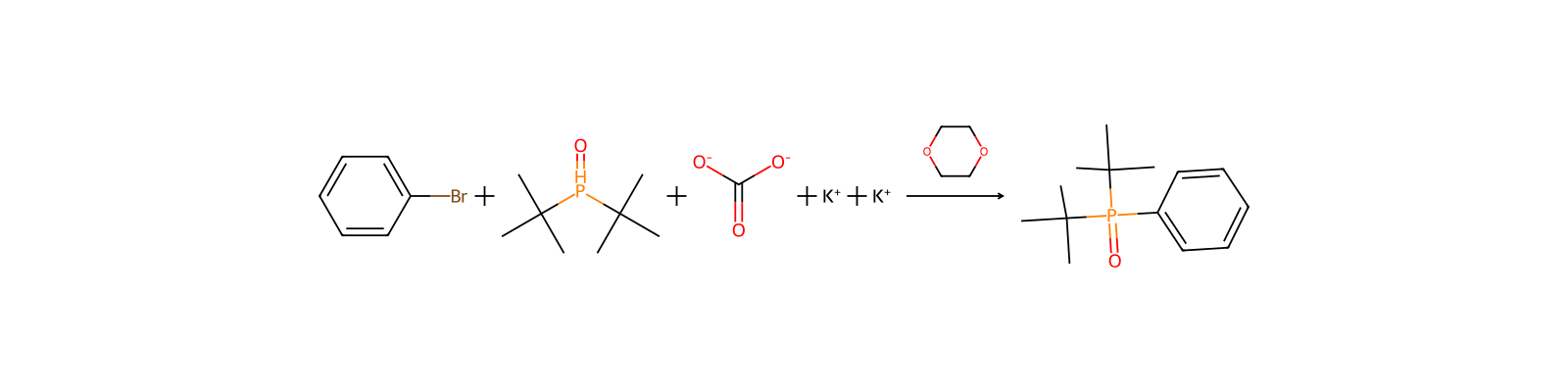
Br[C:2]1[CH:7]=[CH:6][CH:5]=[CH:4][CH:3]=1.[C:8]([PH:12](=[O:17])[C:13]([CH3:16])([CH3:15])[CH3:14])([CH3:11])([CH3:10])[CH3:9].C([O-])([O-])=O.[K+].[K+]>O1CCOCC1>[C:8]([P:12](=[O:17])([C:13]([CH3:16])([CH3:15])[CH3:14])[C:2]1[CH:7]=[CH:6][CH:5]=[CH:4][CH:3]=1)([CH3:11])([CH3:10])[CH3:9]Komponenten
5
Edukt 3
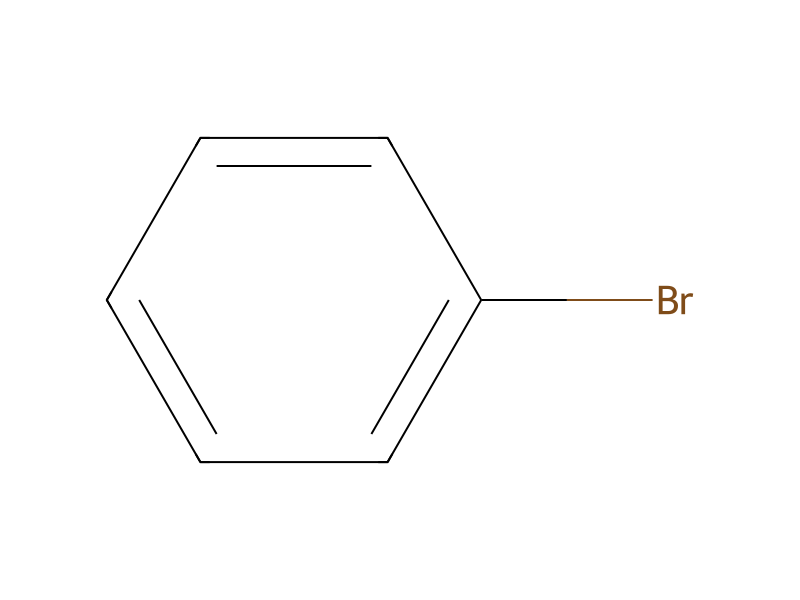


Produkt 1

Reagenzien, Katalysatoren, Lösungsmittel 1

Versuchsvorschrift
A 50 mL of reactor equipped with magnetic stir bar was charged with 186 mg (0.20 mmol) of {[(t-Bu)2P(OH)]2PdCl}2, 1.57 g (10.0 mmol) of bromobenzene, 1.62 g (10.0 mmol) of di-tert-butylphosphine oxide and 1.38 g (10.0 mmol) of K2CO3 in 20.0 mL of 1,4-dioxane. The resulting mixture was refluxed for 23 h to afford di-tert-butylphenylphosphine oxide. 31P NMR (CDCl3, 121 MHz): δ51.9 ppm.
Aufarbeitung
- customA 50 mL of reactor equipped with magnetic stir bar
- temperatureThe resulting mixture was refluxed for 23 h
Quellen und Nachweise
- ORD-Eintrag
- ord-6e7ed5aba4bc4e9fa0958f16f6857ffb
- Quelldatensatz
- uspto-grants-2004_07
- Patentnummer
- US06762330B2
Verknüpfte Notizen
Wird geladen…