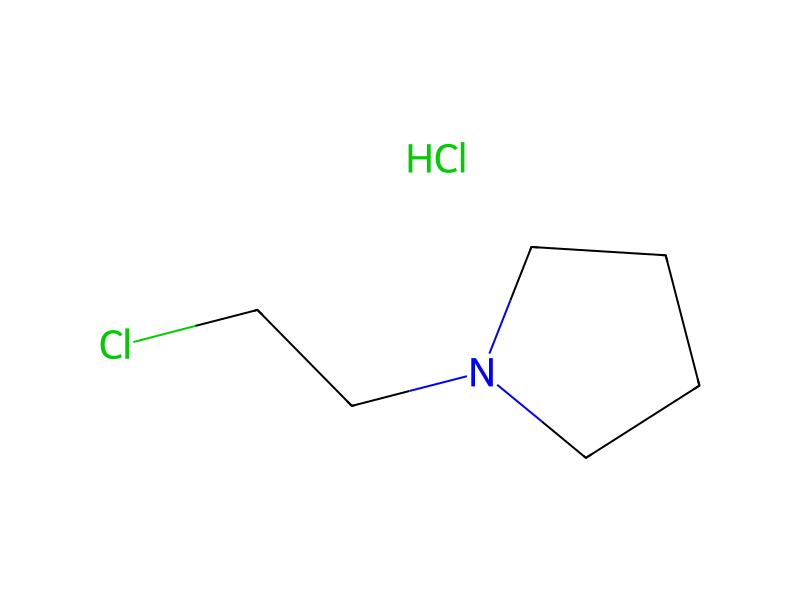
A mixture of 4-nitro-1H-pyrazole (5.00 g, 44.22 mmol), 1-(2-chloro-ethyl)-pyrrolidine hydrochloride (8.86 g, 52.42 mmol), acetonitrile (50 mL) and potassium carbonate (19.00 g, 137.50 mmol) was heated at 80° C. under an argon atmosphere for 16 hours. The reaction mixture was evaporated in vacuo and partitioned between water and dichloromethane. The aqueous phase was extracted twice with dichloromethane and the combined organic layers were washed with brine, dried over sodium sulfate, filtered and concentrated. 4-Nitro-1-(2-pyrrolidin-1-yl-ethyl)-1H-pyrazole was isolated as an orange solid (8.50 g, 91%). MP=39-41° C. 1H NMR (400 MHz, CDCl3, δ, ppm): 8.29 (s, 1H), 8.06 (s, 1H), 4.27 (t, J=6.22 Hz, 2H), 2.95 (t, J=6.17 Hz, 2H), 2.55 (s, 4H), 1.80 (s, 4H). MS=211 (MH)+. 219b) A mixture of 4-nitro-1-(2-pyrrolidin-1-yl-ethyl)-1H-pyrazole (4.40 g, 20.9 mmol), ethanol (100 mL) and 10% palladium on carbon (0.41 g, 30.7 mmol) was hydrogenated in a Paar shaker at 30 psi under hydrogen for 2 h. The reaction mixture was filtered over diatomaceous earth and the filtrate was evaporated in vacuo. 1-(2-Pyrrolidin-1-yl-ethyl)-1H-pyrazol-4-ylamine was isolated as an orange oil, which became a dark gummy material upon standing at room temperature (3.10 g, 82%). 1H NMR (400 MHz, CDCl3, δ, ppm): 7.15 (s, 1H), 7.08 (s, 1H), 4.14 (t, J=7.00 Hz, 2H), 2.88 (t, J=6.97 Hz, 4H), 2.52 (s, 4H), 1.765 (s, 4H). MS=181 (MH)+. 219 c) [8-(4-Methanesulfonyl-phenyl)-[1,2,4]triazolo[1,5-a]pyridin-2-yl]-(1-(2-pyrrolidin-1-yl-ethyl)-1H-pyrazol-4-yl]-amine was synthesized from 2-chloro-8-(4-methanesulfonyl-phenyl)-[1,2,4]triazolo[1,5-a]pyridine (0.150 g, 0.487 mmol) and 1-(2-pyrrolidin-1-yl-ethyl)-1H-pyrazol-4-ylamine (0.105 g, 0.585 mmol) with 2,2-bis-dicyclohexylphosphanyl-biphenyl (0.048 g, 0.088 mmol) as the ligand in a manner analogous to Example 2d. The isolated pure product was treated with 2N hydrogen chloride in dioxane. [8-(4-Methanesulfonyl-phenyl)-[1,2,4]triazolo[1,5-a]pyridin-2-yl]-(1-(2-pyrrolidin-1-yl-ethyl)-1H-pyrazol-4-yl]-amine hydrochloride was isolated as a light green solid (70 mg, 30%). MP=Softened at 155-161° C. then melted at 234-236° C. 1H NMR (400 MHz, (D3C)2SO, δ, ppm): 10.47 (s, 1H), 9.57 (s, 1H), 8.80 (d, J=6.44 Hz, 1H), 8.45 (d, J=8.20 Hz, 2H), 8.105 (d, J=8.20 Hz, 2H), 7.99 (d, J=7.09 Hz, 1H), 7.98 (s, 1H), 7.63 (s, 1H), 7.17 (t, J=6.88 Hz, 1H), 4.55 (t, J=5.88 Hz, 2H), 3.655 (d, J=5.44 Hz, 2H), 3.48 (brs, 2H), 3.32 (s, 3H), 2.99 (brs, 2H), 2.00 (brs, 2H), 1.86 (brs, 2H). MS=452 (MH)+.