1,4-Dioxane hydrochloride → 1,2,3,4,4a,5-Hexahydropyrazino[1,2-a][1,5]benzodiazepin-6(7h)-one
HRID 1896105
Reaktionsgleichung

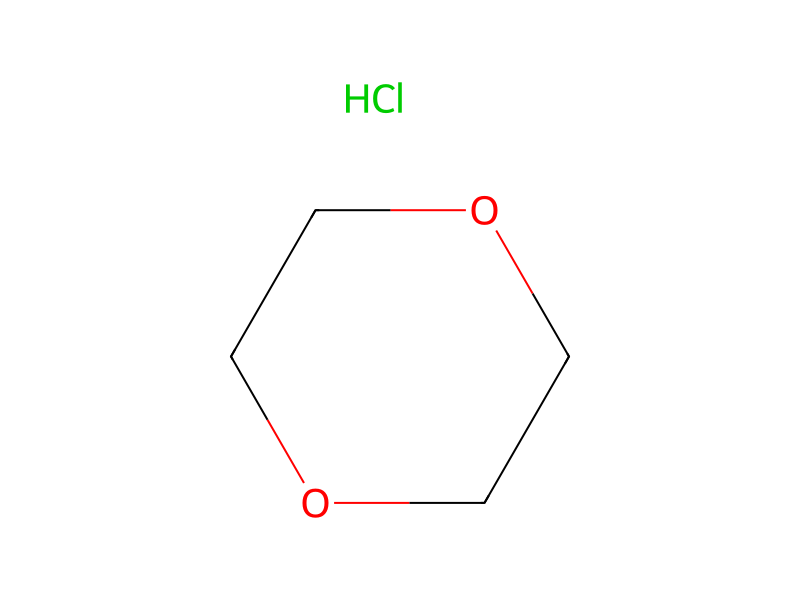
[O:1]=[C:2]1[NH:8][C:7]2[CH:9]=[CH:10][CH:11]=[CH:12][C:6]=2[N:5]2[CH2:13][CH2:14][N:15](C(OC(C)(C)C)=O)[CH2:16][CH:4]2[CH2:3]1.Cl.O1CCOCC1>ClCCl>[CH2:13]1[N:5]2[C:6]3[CH:12]=[CH:11][CH:10]=[CH:9][C:7]=3[NH:8][C:2](=[O:1])[CH2:3][CH:4]2[CH2:16][NH:15][CH2:14]1Komponenten
4
Edukt 2

Produkt 1

Reagenzien, Katalysatoren, Lösungsmittel 1

Versuchsvorschrift
To a solution of Example 1C (1.78 g, 5.61 mmol) in dichloromethane (100 mL) was added 4 M HCl/dioxane (14.02 mL, 56.1 mmol). The solution was stirred for 2-4 hours at room temperature, and title compound was collected by filtration as the hydrochloric acid salt. 1H NMR (500 MHz, pyridine-d5) δ ppm 7.34-7.42 (m, 1 H), 7.24-7.31 (m, 1 H), 7.16-7.23 (m, 1 H), 7.11 (d, J=7.02 Hz, 1 H), 3.92-4.00 (m, 1 H), 3.88 (d, J=11.90 Hz, 1 H), 3.80 (d, J=12.82 Hz, 1 H), 3.64-3.74 (m, 1 H), 3.57 (t, J=11.90 Hz, 1 H), 3.11-3.24 (m, 2 H), 2.64 (dd, J=13.43, 7.02 Hz, 1 H), 2.37 (d, J=12.82 Hz, 1 H); MS (ESI) m/z 217.9 (M+H)+.