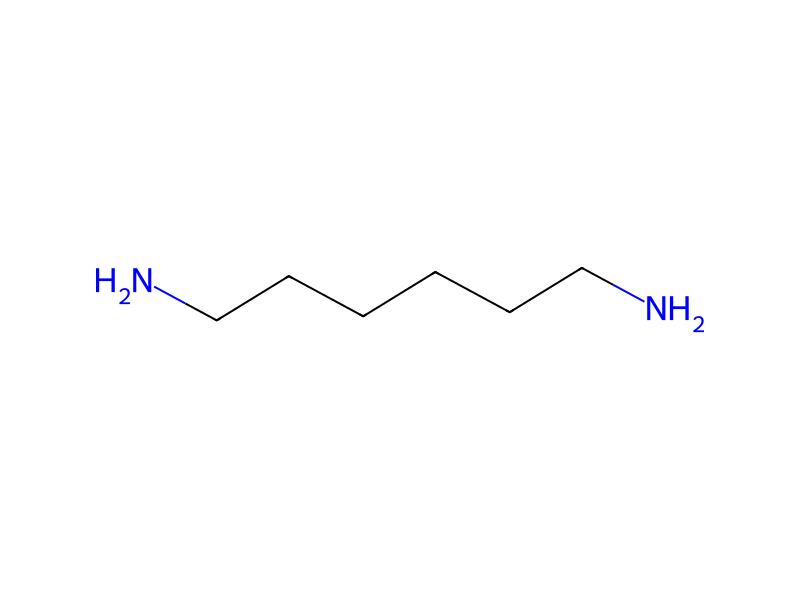
[Cl:1][C:2]1[C:7](OC2C=CC=CC=2)=[C:6]([N+:15]([O-:17])=[O:16])[CH:5]=[CH:4][C:3]=1[O:18][C:19]1[CH:24]=[CH:23][CH:22]=[CH:21][CH:20]=1.[NH2:25][CH2:26][CH2:27][CH2:28][CH2:29][CH2:30][CH2:31][NH2:32]>O1CCOCC1>[Cl:1][C:2]1[C:3]([O:18][C:19]2[CH:20]=[CH:21][CH:22]=[CH:23][CH:24]=2)=[CH:4][CH:5]=[C:6]([N+:15]([O-:17])=[O:16])[C:7]=1[NH:25][CH2:26][CH2:27][CH2:28][CH2:29][CH2:30][CH2:31][NH2:32]A mixture of 17.5 gm of 2-chloro-4-nitro-1,3-diphenoxy-benzene, 30 ml of dioxane and 9 gm of 1,6-diaminohexane was stirred for 4 hours at 50° C. Thereafter, the dioxane was distilled off, the residue was taken up in chloroform, the resulting solution was washed first with dilute sodium hydroxide and then with dilute hydrochloric acid, dried with sodium sulfate, and the chloroform was distilled off. The residue was dissolved in diethyl ether, gaseous hydrogen chloride was passed through the resulting solution, the precipitate formed thereby was collected by suction filtration, and the semi-solid filter cake was stirred with a mixture of chloroform and an aqueous sodium carbonate solution. The organic phase was separated, dried with sodium sulfate, and the chloroform was distilled off, leaving 12.5 gm (69% of theory) of the title compound as a viscous yellow oil.