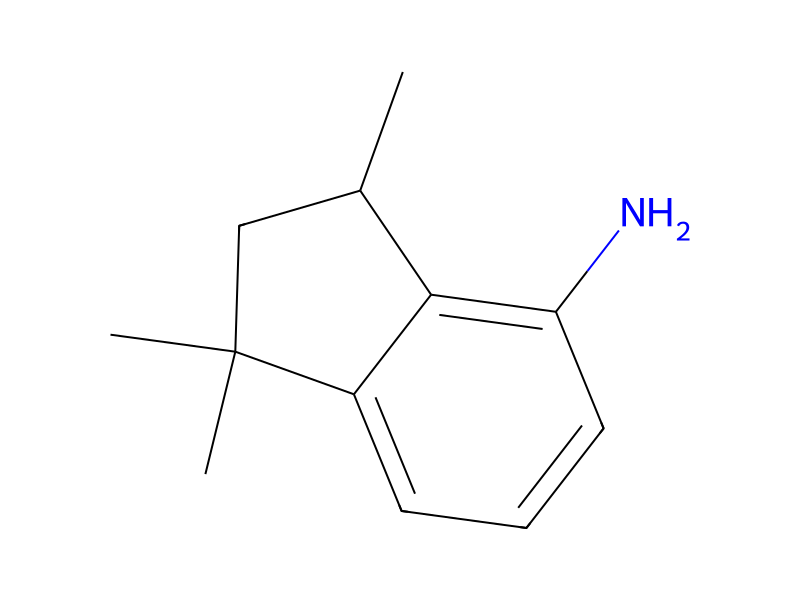
Cl[C:2]1[N:10]=[CH:9][CH:8]=[CH:7][C:3]=1[C:4](Cl)=[O:5].[F-:11].[K+].[NH2:13][C:14]1[CH:22]=[CH:21][CH:20]=[C:19]2[C:15]=1[CH:16]([CH3:25])[CH2:17][C:18]2([CH3:24])[CH3:23].C(N(CC)CC)C>C1(C)C=CC=CC=1>[F:11][C:2]1[C:3]([C:4]([NH:13][C:14]2[CH:22]=[CH:21][CH:20]=[C:19]3[C:15]=2[CH:16]([CH3:25])[CH2:17][C:18]3([CH3:24])[CH3:23])=[O:5])=[CH:7][CH:8]=[CH:9][N:10]=1To a solution of 2.6 g (14.8 mmol) of 2-chloronicotinic acid chloride in 15 ml of sulforan was added 2.6 g (46.4 mmol) of potassium fluoride, and the mixture was stirred under heating at 155° C. for 6 hours. After cooling, precipitated crystals were filtered out. The filtrate was added dropwise to a solution of 2 g (11.4 mmol) of 4-amino-1,1,3-trimethylindane and 1.6 g (15.8 mmol) of triethylamine in 10 ml of toluene under ice cooling, and the mixture was stirred at room temperature for 2 hours. The reaction solution was then added with 30 ml of toluene, washed with water, dried over Glauber's salt and concentrated under reduced pressure. The residue was purified by silica gel chromatography (eluent: n-hexane/ethyl acetate=4/1) to obtain 1.6 g of oil (Compound No. 9 shown in Table 2) in a yield of 47%.