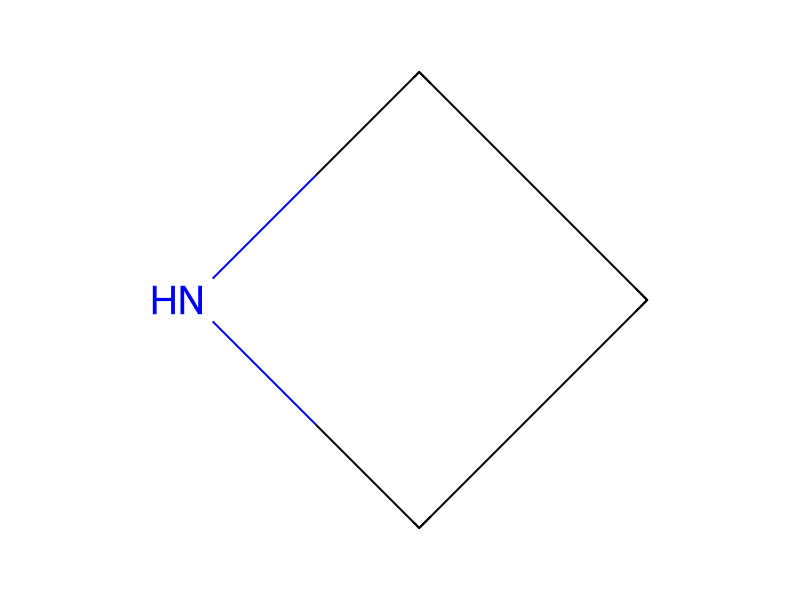
[F:1][S:2]([C:5]1[CH:10]=[CH:9][CH:8]=[CH:7][C:6]=1[S:11](Cl)(=[O:13])=[O:12])(=[O:4])=[O:3].[NH:15]1[CH2:18][CH2:17][CH2:16]1.C(N(CC)CC)C>C(#N)C>[N:15]1([S:11]([C:6]2[CH:7]=[CH:8][CH:9]=[CH:10][C:5]=2[S:2]([F:1])(=[O:4])=[O:3])(=[O:13])=[O:12])[CH2:18][CH2:17][CH2:16]1In a flask was placed 9.24 g of 2-fluorosulfonylbenzenesulfonyl chloride and 200 ml of dry acetonitrile. The resultant solution was cooled to 0° C. An addition funnel was charged with 2 g of azetidine, 4.95 ml of triethylamine and 50 ml of acetonitrile. This solution was added dropwise to the first solution. After stirring overnight the solvent was evaporated under reduced pressure. The residue was partitioned between dichloromethane and 1N hydrochloric acid. The organic layer was separated, dried and concentrated to give 9.80 g of a solid, m.p. 93° C.