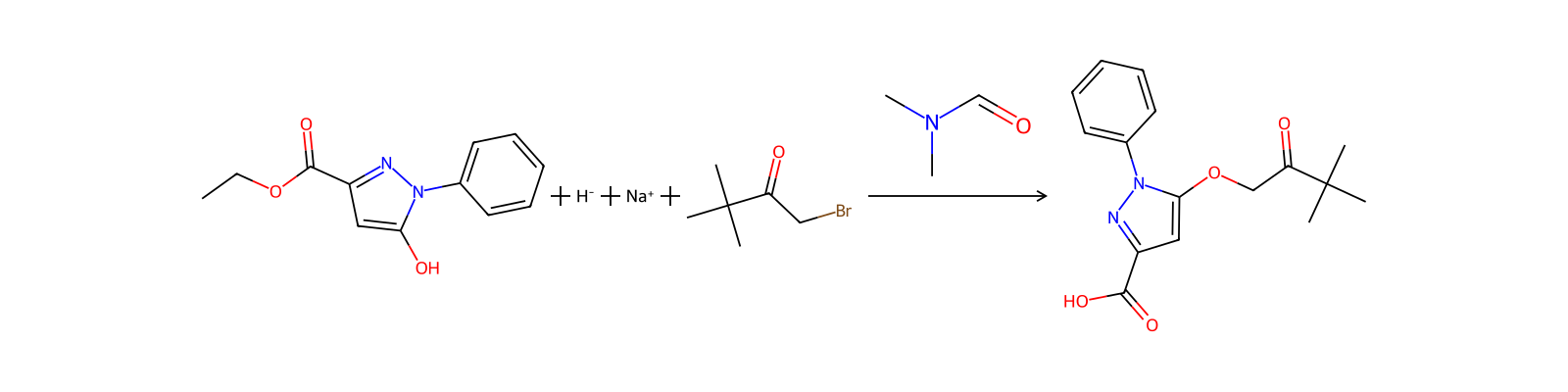
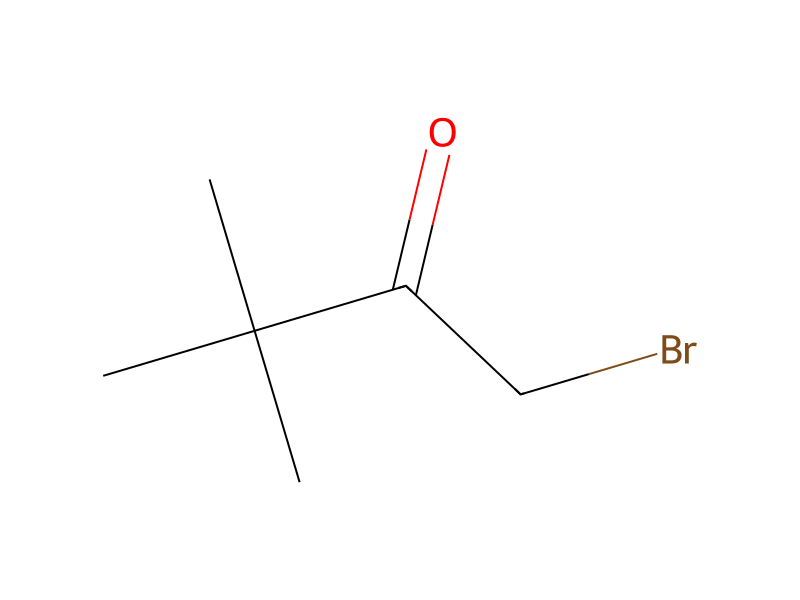
C([O:3][C:4]([C:6]1[CH:10]=[C:9]([OH:11])[N:8]([C:12]2[CH:17]=[CH:16][CH:15]=[CH:14][CH:13]=2)[N:7]=1)=[O:5])C.[H-].[Na+].Br[CH2:21][C:22](=[O:27])[C:23]([CH3:26])([CH3:25])[CH3:24]>CN(C=O)C>[CH3:24][C:23]([CH3:26])([CH3:25])[C:22](=[O:27])[CH2:21][O:11][C:9]1[N:8]([C:12]2[CH:13]=[CH:14][CH:15]=[CH:16][CH:17]=2)[N:7]=[C:6]([C:4]([OH:3])=[O:5])[CH:10]=1To a solution of 5 g 5-Hydroxy-1-phenyl-1H-pyrazole-3-carboxylic acid ethyl ester in 12 ml of DMF was added at 0° C. 1.29 g of sodium hydride (60% in mineral oil). After 15 min at this temperature 3.85 g of 1-Bromo-3,3-dimethyl-butan-2-one were added. After 2 h at RT the mixture was poured on ice/water and extracted with ethyl acetate. The organic phase was washed with brine and dried over sodium sulfate followed by evaporation. The residue was taken up in 20 ml of THF and treated with 21.5 ml of 2M NaOH. After 2 h, additional 15 ml 2M NaOH were added. Finally, after 3 h the THF was evaporated and the residue acidified with 2M HCl resulting in the precipitation of a gum. The gum was dissolved in ethyl acetate and coevaporated with toluene. Stirring in ethyl acetate/hepatne 1:1 gave a gummy substance which solidified on evaporation.
Wird geladen…