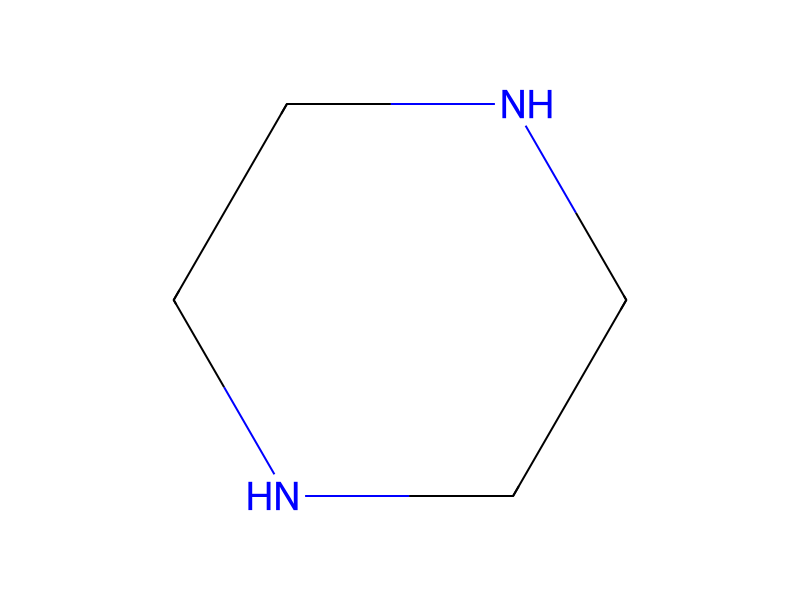
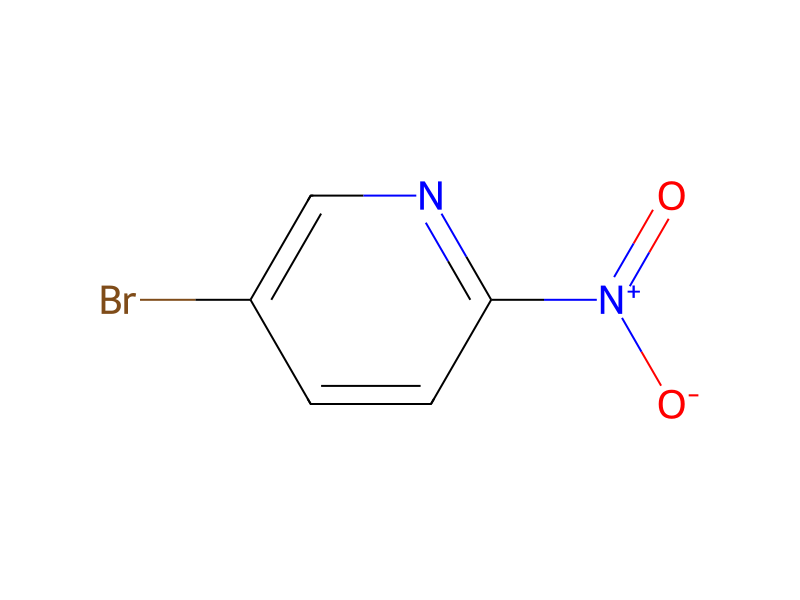
Piperazine → 1-(6-Nitropyridin-3-yl)piperazine
HRID 1919010
Reaktionsgleichung

[N+:1]([C:4]1[CH:9]=[CH:8][C:7](Br)=[CH:6][N:5]=1)([O-:3])=[O:2].[NH:11]1[CH2:16][CH2:15][NH:14][CH2:13][CH2:12]1>C(#N)C>[N+:1]([C:4]1[N:5]=[CH:6][C:7]([N:11]2[CH2:16][CH2:15][NH:14][CH2:13][CH2:12]2)=[CH:8][CH:9]=1)([O-:3])=[O:2]Komponenten
4
Edukt 2
Produkt 1

Reagenzien, Katalysatoren, Lösungsmittel 1

Versuchsvorschrift
A 250-mL three-neck round-bottomed flask equipped with a magnetic stirrer and reflux condenser was charged with 2-nitro-5-bromopyridine (5.00 g, 24.6 mmol), piperazine (5.66 g, 65.7 mmol) and acetonitrile (70 mL). The reaction mixture was heated at reflux for 20 h. After this time, the reaction mixture was cooled to room temperature and concentrated under reduced pressure. The residue was diluted with ethyl acetate (200 mL) and washed with saturated aqueous sodium bicarbonate (100 mL). The organic layer was dried over sodium sulfate, filtered and concentrated under reduced pressure. The resulting residue was titrated with hexane/ethyl acetate (1:1, 30 mL) to afford 217a in 41% yield (2.10 g) as a yellow solid: mp 113-115° C.; 1H NMR (500 MHz, DMSO-d6) d 8.23 (d, 1H, J=3.5 Hz), 8.13 (d, 1H, J=9.0 Hz), 7.44 (dd, 1H, J=9.0, 3.5 Hz), 3.41 (t, 4H, J=5.0 Hz), 2.82 (t, 4H, J=5.0 Hz), 1.90 (s, 1H); MS (ESI+) m/z 209.1 (M+H).