Ammonia → 4-Bromo-2,6-difluorobenzamide
HRID 1924954
Reaktionsgleichung

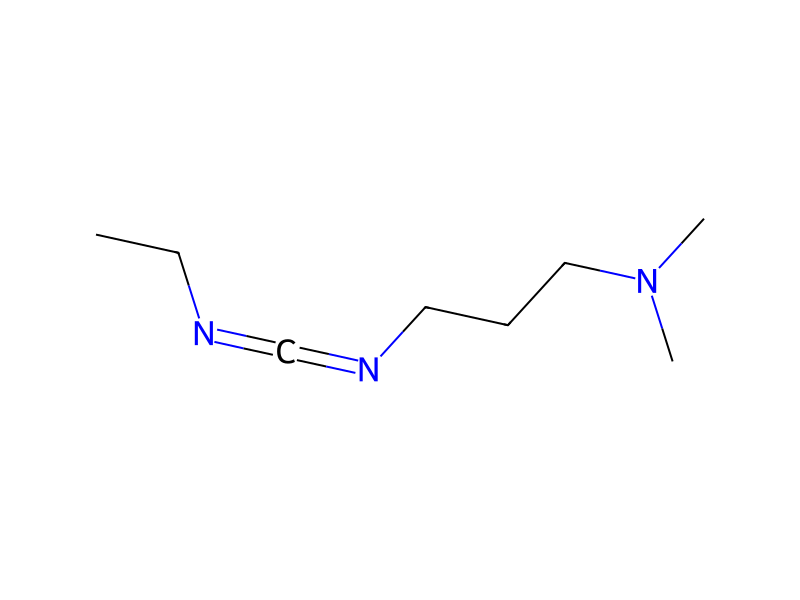
[Br:1][C:2]1[CH:10]=[C:9]([F:11])[C:5]([C:6](O)=[O:7])=[C:4]([F:12])[CH:3]=1.O[N:14]1C2C=CC=CC=2N=N1.C(N=C=NCCCN(C)C)C.N>>[Br:1][C:2]1[CH:10]=[C:9]([F:11])[C:5]([C:6]([NH2:14])=[O:7])=[C:4]([F:12])[CH:3]=1Komponenten
5




Versuchsvorschrift
To a solution of 4-bromo-2,6-difluoro-benzoic acid (2.77 g, 11.7 mmol) and 1-hydroxybenzotriazole (1.74 g, 12.8 mmol) is added 1-ethyl-3-(3′-dimethylaminopropyl)carbodiimide (2.46 g, 12.9 mmol) and the solution is stirred at room temperature for 2 hours. After cooling at 0° C. is added aq. NH3 (1.74 mL) and the reaction mixture is stirred for an additional 20 hours. The solvent is evaporated in vacuo and the residue partitioned between diethyl ether and water. The aqueous phase is extracted several times with Et2O, the organic layers are then combined, washed with 1M HCl, sat. NaHCO3, dried over MgSO4, filtered and concentrated in vacuo to afford the benzamide as a white solid (2.56 g, 93%).