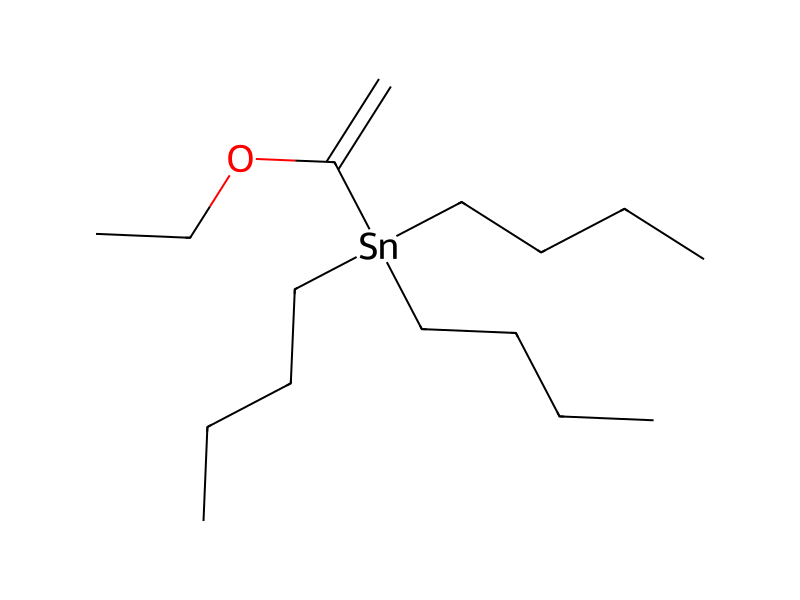
To a solution of 2-bromo-4-fluoro-6-methoxy aniline (4.80 g, 21.8 mmol), which had been obtained in Reference example 3(3a), in 1,4-dioxane (200 mL), tributyl (1-ethoxy vinyl) tin (11.1 mL, 32.7 mmol) and tetrakistriphenyl phosphine palladium (2.52 g, 2.18 mmol) were added, and the mixture was stirred for 16 hours at 100° C. After cooling the reaction solution to room temperature, 1 N aqueous hydrogen chloride solution (100 mL) was added and stirred further for 2 hours. The reaction solution was concentrated under reduced pressure, neutralized by adding 1 N aqueous sodium hydroxide solution, and then extracted with ethyl acetate. The organic layer was washed with saturated brine and dried over anhydrous magnesium sulfate. The solvent was distilled off under reduced pressure. The residue was purified by silica gel chromatography (n-hexane/ethyl acetate=4/1) to give the title compound as a yellow solid substance (2.80 g, yield 70%).