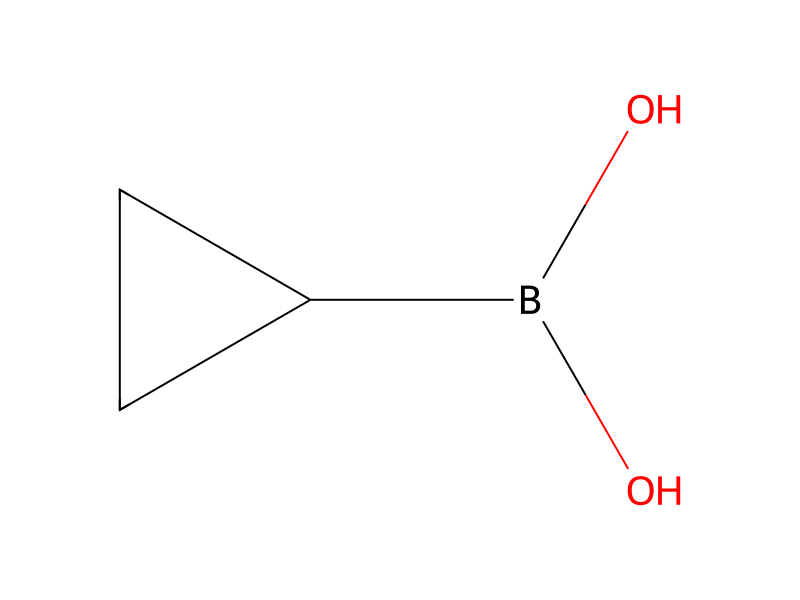
A mixture of 2-fluoro-5-bromopyridine (1.17 ml, 11.4 mmol), cyclopropylboronic acid (1.47 g, 17.1 mmol) and potassium phosphate (7.26 g, 34.2 mmol) in 1,4-dioxane (20 ml) was stirred under argon atmosphere. Chloro(di-2-norbornylphosphino)(2-dimethylaminoferrocen-1-yl)palladium(II) (67 mg, 0.11 mmol) was added. The reaction mixture was heated at 100° C. under argon atmosphere for 48 hours and then cooled down to room temperature. The crude mixture was partitioned between ethyl acetate and water. The organic phase was washed with brine, dried over magnesium sulfate, filtered and concentrated in vacuo. The residue was purified on silica gel by flash column chromatography (ISCO Companion|, 80 g column, 0-10% EtOAc/Petroleum ether) to afford the compound (70:30 mixture product: starting material; 1.55 g).