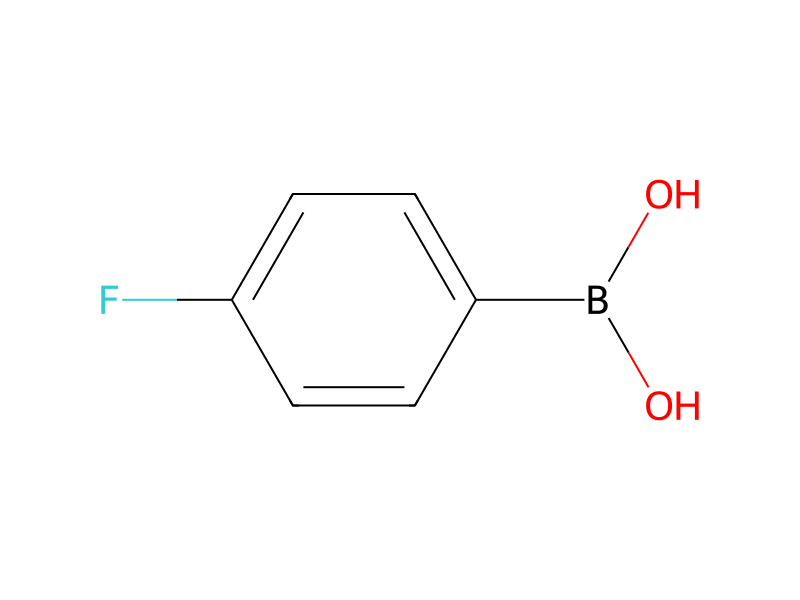
Br[C:2]1[S:6][C:5]([CH:7]=[CH:8][C:9]([OH:11])=[O:10])=[CH:4][CH:3]=1.[F:12][C:13]1[CH:18]=[CH:17][C:16](B(O)O)=[CH:15][CH:14]=1.C(=O)([O-])[O-].[Na+].[Na+]>COCCOC.C1C=CC([P]([Pd]([P](C2C=CC=CC=2)(C2C=CC=CC=2)C2C=CC=CC=2)([P](C2C=CC=CC=2)(C2C=CC=CC=2)C2C=CC=CC=2)[P](C2C=CC=CC=2)(C2C=CC=CC=2)C2C=CC=CC=2)(C2C=CC=CC=2)C2C=CC=CC=2)=CC=1>[F:12][C:13]1[CH:18]=[CH:17][C:16]([C:2]2[S:6][C:5]([CH:7]=[CH:8][C:9]([OH:11])=[O:10])=[CH:4][CH:3]=2)=[CH:15][CH:14]=11 g (4.3 mmol) of 3-(5-bromo-thiophen-2-yl)-acrylic acid and 247 mg (0.2 mmol) of tetrakis(triphenylphosphine)palladium were dissolved in 50 ml of degassed DME and stirred at room temperature for 10 min. 0.900 g (6.4 mmol) of 4-fluoro -phenylboronic acid and 4 ml of a 2 M aqueous sodium carbonate solution were added together with an additional 5 ml of degassed DME. The reaction mixture was heated to 95° C. for 4 h and then stirred at room temperature for 16 h. Solids were removed by filtration, and the solution was evaporated to dryness. The residue was dissolved in ethyl acetate and washed three times with a saturated sodium hydrogencarbonate solution and once with a saturated sodium chloride solution. The organic phase was dried with sodium sulfate, filtered, and the solvent was removed under reduced pressure. Yield: 500 mg.