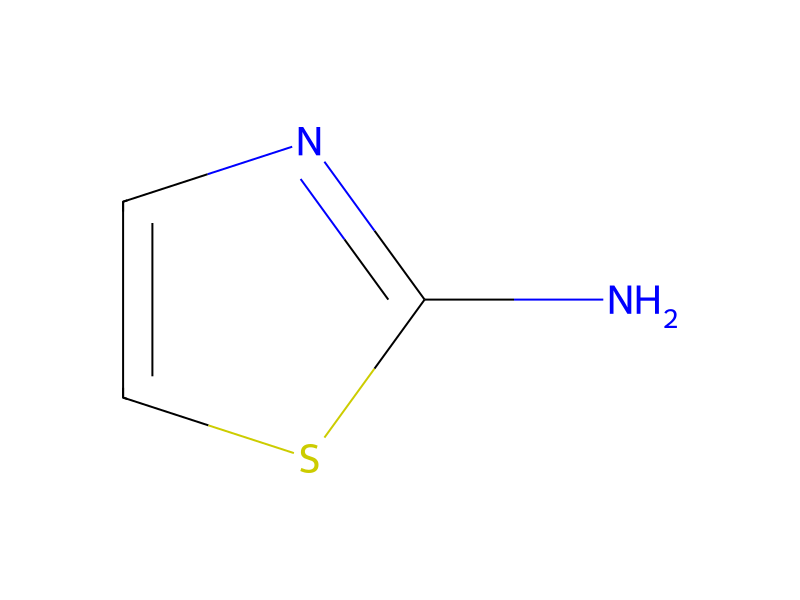
C1(P(C2C=CC=CC=2)C2C=CC=CC=2)C=CC=CC=1.BrN1C(=O)CCC1=O.[CH:28]1([CH2:33]/[CH:34]=[C:35](\[C:39]2[CH:44]=[CH:43][C:42]([N:45]3[C:49]([CH3:50])=[N:48][N:47]=[N:46]3)=[C:41]([C:51]([F:54])([F:53])[F:52])[CH:40]=2)/[C:36]([OH:38])=O)[CH2:32][CH2:31][CH2:30][CH2:29]1.[NH2:55][C:56]1[S:57][CH:58]=[CH:59][N:60]=1>C(Cl)Cl>[S:57]1[CH:58]=[CH:59][N:60]=[C:56]1[NH:55][C:36](=[O:38])/[C:35](/[C:39]1[CH:44]=[CH:43][C:42]([N:45]2[C:49]([CH3:50])=[N:48][N:47]=[N:46]2)=[C:41]([C:51]([F:54])([F:52])[F:53])[CH:40]=1)=[CH:34]/[CH2:33][CH:28]1[CH2:29][CH2:30][CH2:31][CH2:32]1A solution of triphenylphosphine (450 mg, 1.72 mmol) in methylene chloride (20 mL) was cooled to 0° C. and then treated with N-bromosuccinimide (306 mg, 1.72 mmol). The reaction mixture was stirred at 0° C. for 30 min and then treated with a solution of the (E)-4-cyclopentyl-2-[4-(5-methyl-tetrazol-1-yl)-3-trifluoromethyl-phenyl]-but-2-enoic acid (326 mg, 0.86 mmol) in methylene chloride (5 mL). The reaction mixture was stirred for 15 min at 0° C. and then allowed to warm to 25° C. where it was stirred for 1.5 h. The reaction mixture was then treated with 2-aminothiazole (257 mg, 2.57 mmol), and the resulting suspension was stirred for 2 d at 25° C. The reaction mixture was then concentrated in vacuo to remove methylene chloride, and the residue was diluted with ethyl acetate (20 mL) and water (30 mL). The two layers were separated, and the aqueous layer was extracted with ethyl acetate (1×15 mL). The combined organic extracts were successively washed with a saturated aqueous sodium bicarbonate solution (1×50 mL) and a saturated aqueous sodium chloride solution (1×50 mL), dried over anhydrous magnesium sulfate, filtered, and concentrated in vacuo. Biotage chromatography (FLASH 40S, Silica, 3/1 hexanes/ethyl acetate) afforded (E)-4-cyclopentyl-2-[4-(5-methyl-tetrazol-1-yl)-3-trifluoromethyl-phenyl]-but-2-enoic acid thiazol-2-ylamide (52 mg, 13%) as an amorphous white solid: EI-HRMS m/e calcd for C21H21F3N6OS (M+) 462.1450, found 462.1451.