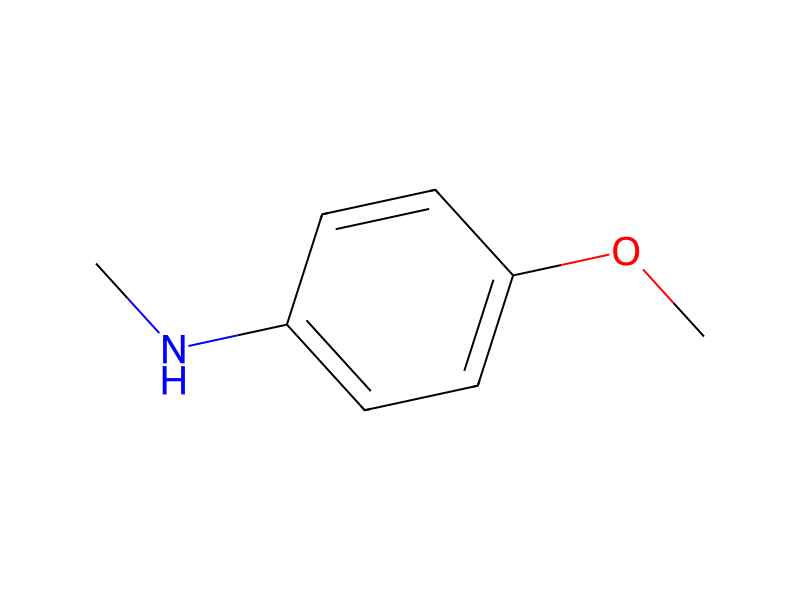
Under nitrogen in a flame-dried round-bottomed flask fitted with a dropping funnel, stir bar and condensor, was added N-methyl-p-anisidine (1.0 grams, 7.29 mmol) in 30 mL of anhydrous tetrahydrofuran (THF). To this was added triethylamine (1.01 mL, 7.29 mmol) and the flask was cooled to 0° C. with an ice bath. Next, 2,4-dimethyl-5-thiazolesulfonyl chloride (1.54 grams, 7.29 mmol, Maybridge Chem. Co.) in 20 mL of THF was added dropwise and the reaction allowed to stir at 25° C. overnight. The reaction was quenched by pouring it slowly into 200 mL of saturated aqueous sodium bicarbonate and extracting the crude product with dichloromethane (CH2Cl2). After drying the organic extracts over magnesium sulfate (MgSO4), the solvent was removed in vacuo to a dark brown oil. Chromatography on silica gel, eluting with hexanes:ethyl acetate (EtOAc) (4:1), gave 380 mg of pale brown oil.