StartseiteMCPWorkbenchSkills
StartseiteWorkbenchBenachrichtigungenMein Bereich
llms.txt · MCP-AnleitungDatenschutz · Nutzungsbedingungen · Supportv1.8.3
  1. Startseite
  2. /Reaktion

Trimethylsilylacetylene → {4-Fluoro-7-[5-(4-fluoro-benzyl)-[1,2,3]triazol-1-yl]-6,7,8,9-tetrahydropyrido[1,2-a]indol-10-yl}-acetic acid

HRID 1944024
Drucken

Reaktionsgleichung

Reaktionsgleichung von HRID 1944024
[N:1]([CH:4]1[CH2:24][N:8]2[C:9]3[C:14]([C:15]([CH2:16][C:17]([O:19]CCC)=[O:18])=[C:7]2[CH2:6][CH2:5]1)=[CH:13][CH:12]=[CH:11][C:10]=3[F:23])=[N+:2]=[N-:3].[F:25][C:26]1[CH:31]=[CH:30][C:29]([CH2:32][C:33]#[CH:34])=[CH:28][CH:27]=1.C([Si](C)(C)C)#C.C([Mg]Br)C.FC1C=CC(CBr)=CC=1>C1COCC1.[Cu](Br)Br>[F:23][C:10]1[CH:11]=[CH:12][CH:13]=[C:14]2[C:9]=1[N:8]1[CH2:24][CH:4]([N:1]3[C:33]([CH2:32][C:29]4[CH:30]=[CH:31][C:26]([F:25])=[CH:27][CH:28]=4)=[CH:34][N:3]=[N:2]3)[CH2:5][CH2:6][C:7]1=[C:15]2[CH2:16][C:17]([OH:19])=[O:18]
KomponentenVersuchsvorschriftAufarbeitungQuellen und NachweiseNotizen zur Reaktion

Komponenten

8

Edukt 5

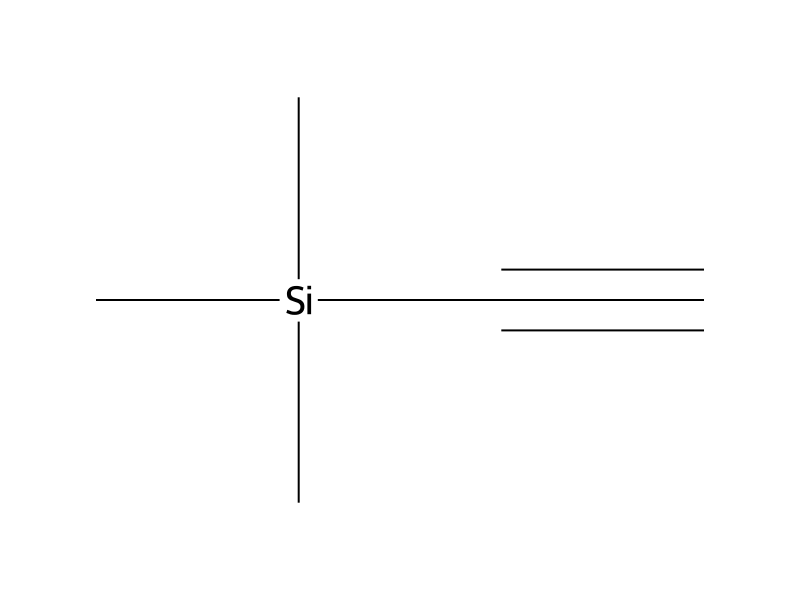
HCID 66111TrimethylsilylacetyleneHCID 680214-Fluorobenzyl bromideHCID 105586681-Fluoro-4-prop-2-ynyl-benzeneHCID 86645392Propyl (7-azido-4-fluoro-6,7,8,9-tetrahydropyrido[1,2-a]indol-10-yl)acetateHCID 178418443HCID 178418443, Verbindung

Produkt 1

HCID 46893928
{4-Fluoro-7-[5-(4-fluoro-benzyl)-[1,2,3]triazol-1-yl]-6,7,8,9-tetrahydropyrido[1,2-a]indol-10-yl}-acetic acid

Reagenzien, Katalysatoren, Lösungsmittel 2

HCID 24611Copper bromide (CuBr2)KatalysatorHCID 8028TetrahydrofuranLösungsmittel2×

Versuchsvorschrift

The title compound was prepared using analogous procedures described in EXAMPLE 3 from propyl (7-azido-4-fluoro-6,7,8,9-tetrahydropyrido[1,2-a]indol-10-yl)acetate (EXAMPLE 7, Step 6) and 1-fluoro-4-prop-2-yn-1-ylbenzene obtained according to the following procedure (Gazz. Chim. Ital. 1990, 120, 783). To a mixture of ethynyltrimethylsilane (1 eq) in THF (0.6M) at room temperature was added ethylmagnesium bromide (1 eq). The mixture was stirred at room temperature for 30 min then copper bromide (I) (0.1 eq) was added. After stirring for 30 min, a 1M solution of 4-fluorobenzyl bromide (1 eq) in THF was added and the mixture was heated to reflux overnight. The reaction mixture was quenched by addition to a cold solution of NH4Cl sat, stirred for 30 min then extracted with Et2O, washed with brine, dried and evaporated. Purification by Combi-flash using a gradient of 0-100% EA/Hex afforded the desired TMS alkyne. The TMS alkyne was directly mixed with potassium fluoride (1.2 eq) in DMF (0.2M containing 1% water). The mixture was stirred at room temperature overnight then quenched by addition of HC13N, stirred for 1 h then extracted with pentanes, washed with NaHCO3 sat, brine, dried and evaporated. Crude alkyne compound was used directly for click chemistry described in EXAMPLE 3. The resulting racemic esters were resolved by HPLC using a 4.6×250 mm Chiralpak AS column eluting with 60% EtOH, 39.75% Hexanes and 0.25% Et3N at 0.8 mL/min and 254 nm. The resulting chiral esters (retention times=10.3 and 13.3 min) were hydrolyzed to afford EXAMPLE 8.1 and 8.2 respectively. 1H NMR of EXAMPLE 8.1: 1H NMR (400 MHz, DMSO-d6): δ 12.20 (s, 1H), 7.55 (s, 1H), 7.33 (dd, 2H), 7.27 (d, 1H), 7.17 (t, 2H), 6.96 (td, 1H), 6.85 (dd, 1H), 5.23-5.09 (m, 1H), 4.58 (dd, 1H), 4.44 (dd, 1H), 4.25 (s, 2H), 3.65-3.52 (m, 2H), 3.12-3.02 (m, 1H), 2.89 (ddd, 1H), 2.32-2.19 (m, 1H), 2.14-2.02 (m, 1H). MS (+ESI) m/z: 423.1.

Aufarbeitung

  1. customobtained
  2. stirringAfter stirring for 30 min
  3. temperaturethe mixture was heated
  4. temperatureto reflux overnight
  5. customThe reaction mixture was quenched by addition to a cold solution of NH4Cl
  6. stirringstirred for 30 min
  7. extractionthen extracted with Et2O
  8. washwashed with brine
  9. customdried
  10. customevaporated
  11. customPurification by Combi-flash

Quellen und Nachweise

ORD-Eintrag
ord-cbfb3d95cd504f93aae22494f496e148
Quelldatensatz
uspto-grants-2013_03
DOI
10.6084/m9.figshare.5104873.v1
Patentnummer
US08394819B2

Notizen zur Reaktion

Auf dieser SeiteKomponentenVersuchsvorschriftAufarbeitungQuellen und NachweiseNotizen zur Reaktion
