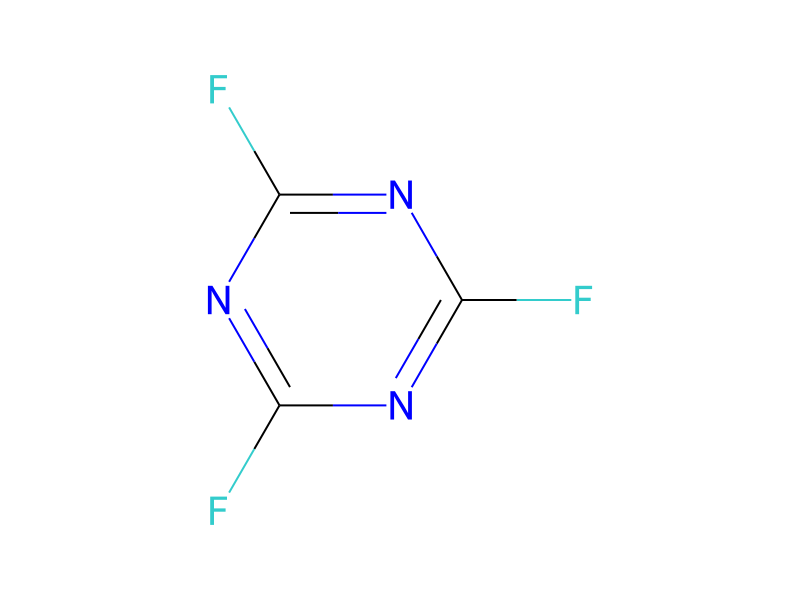
To a mixture of 5-phenyl-4-(trifluoromethyl)isoxazole-3-carboxylic acid (197 mg, 0.766 mmol) and pyridine (0.074 mL, 0.919 mmol) in dichloromethane (5 mL) at room temperature was added cyanuric fluoride (0.078 mL, 0.919 mmol). The reaction mixture was stirred at room temperature for 18 h. The mixture was diluted with dichloromethane (40 mL) and washed with an ice-cold 0.5N aqueous solution of hydrochloric acid (20 mL). The aqueous layer was extracted with dichloromethane (20 mL), and the combined organic layers were washed with ice-cold water (20 mL) and dried over anhydrous magnesium sulfate. Concentration under reduced pressure afforded 5-phenyl-4-(trifluoromethyl)isoxazole-3-carbonyl fluoride (199 mg, 0.768 mmol, 100% yield) as a pale yellow oil. The compound had an HPLC retention time=2.53 min. (methyl ester)-Column: CHROMOLITH® SpeedROD 4.6×50 mm (4 min.); Solvent A=10% MeOH, 90% H2O, 0.1% TFA; Solvent B=90% MeOH, 10% H2O, 0.1% TFA.