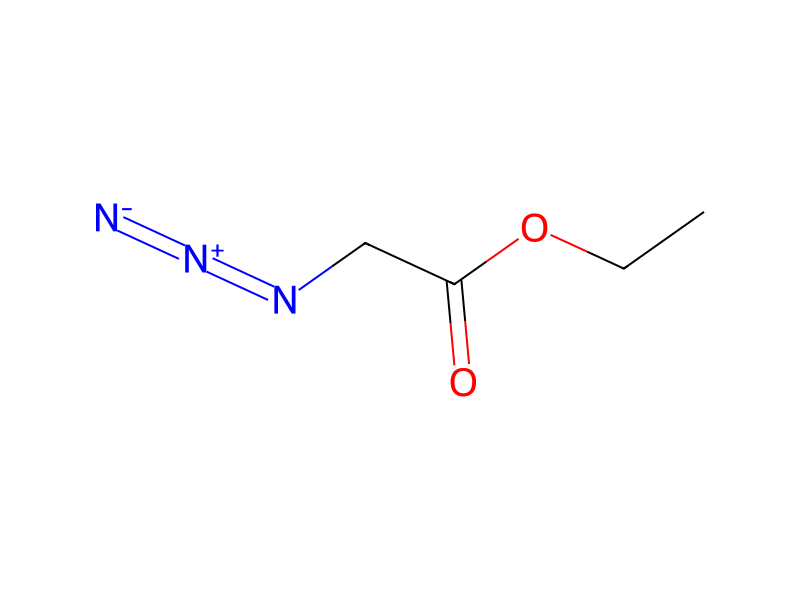
1.26 g (54.96 mmol) of sodium and 30 ml of anhydrous ethanol are introduced into a 100 ml round-bottomed flask equipped with a magnetic stirrer and maintained under a nitrogen atmosphere. The reaction mixture is stirred at ambient temperature until a homogeneous solution is obtained. A solution containing 16.83 ml (54.96 mmol) of ethyl azidoacetate (34% in CH2Cl2) and 5 g (27.48 mmol) of 4-trimethylsilylbenzaldehyde in 5 ml of ethanol is added dropwise to this solution, cooled to −10° C. The reaction mixture is subsequently stirred at 0° C. for 4 hours. The reaction medium is hydrolysed by adding 100 ml of an ammonium chloride solution (30% aqueous) with vigorous stirring. The product is extracted with three times 50 ml of ethyl acetate. The combined organic phases are washed with twice 20 ml of water, dried over sodium sulphate and concentrated under reduced pressure. The resulting oil is purified by silica gel column chromatography, elution being carried out with a mixture of heptane and dichloromethane. 4.96 g of the expected product are isolated in the form of a yellow oil.