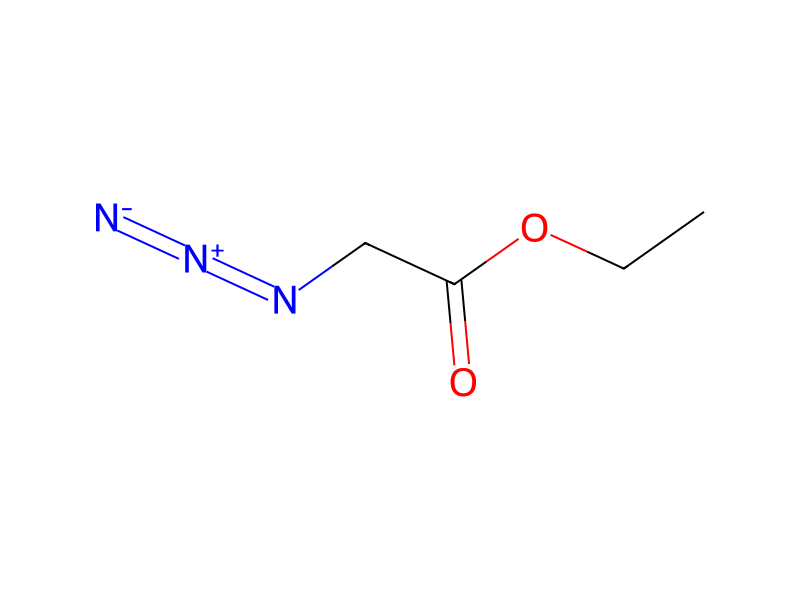
A mixture of 31.4 ml (87.5 mmol) of ethyl azidoacetate (at 34% in CH2Cl2) and 3.9 g (21.87 mmol) of 3-trimethylsilylbenzaldehyde prepared according to the procedure described in stage 3.2, diluted in 3 ml of EtOH, is added dropwise to a solution of 2 g (87.5 mmol) of sodium in 30 ml of anhydrous EtOH, maintained under a nitrogen atmosphere and cooled to −10° C. The reaction mixture is stirred at 0° C. for 4 h. It is subsequently hydrolysed by adding, with vigorous stirring, 100 ml of an aqueous solution of NH4Cl (30%). The aqueous phase is extracted with 3×50 ml of EtOAc. The combined organic phases are washed with water, dried over Na2SO4 and concentrated under reduced pressure. The reaction crude is purified by silica gel column chromatography, elution being carried out with an isocratic mixture of heptane and CH2Cl2 (80/20). 1.7 g of the expected ethyl 2-azido-3-(3-trimethylsilylphenyl)propenoate are thus isolated in the form of a yellow oil.