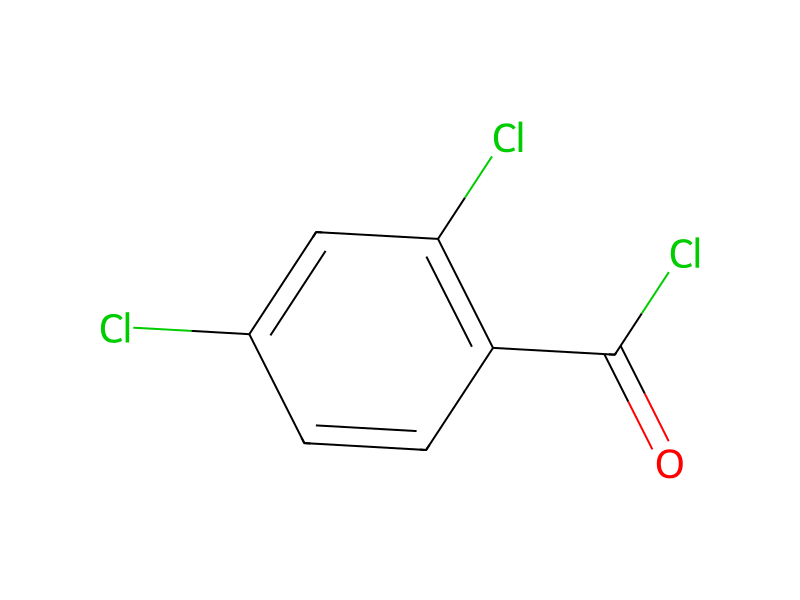
[C:1]1([C:7]2[O:8][CH:9]=[C:10]([C:12]3[CH:17]=[CH:16][C:15]([NH2:18])=[CH:14][CH:13]=3)[N:11]=2)[CH:6]=[CH:5][CH:4]=[CH:3][CH:2]=1.N1C=CC=CC=1.[Cl:25][C:26]1[CH:34]=[C:33]([Cl:35])[CH:32]=[CH:31][C:27]=1[C:28](Cl)=[O:29]>ClCCl>[Cl:25][C:26]1[CH:34]=[C:33]([Cl:35])[CH:32]=[CH:31][C:27]=1[C:28]([NH:18][C:15]1[CH:14]=[CH:13][C:12]([C:10]2[N:11]=[C:7]([C:1]3[CH:2]=[CH:3][CH:4]=[CH:5][CH:6]=3)[O:8][CH:9]=2)=[CH:17][CH:16]=1)=[O:29]to a solution of 4-(2-phenyloxazol-4-yl)benzenamine (299 mg, 1266 μmol) and pyridine (500 μl, 6131 μmol) dissolved in 4 mL dichloromethane at room temperature was added 2,4-dichlorobenzoyl chloride (177 μl, 1266 μmol) all at once. The reaction was stirred at room temperature for 1 hour then concentrated under reduced pressure, taken up in heptane and concentrated again under reduced pressure to afford a yellow solid. The solid was partitioned between dichloromethane and saturated aqueous sodium bicarbonate solution. The organic extract was dried over magnesium sulfate, filtered and the filtrate concentrated under reduced pressure to afford a yellow solid. The product was purified by preparative reversed phase HPLC. Combination of fractions containing product were concentrated under reduced pressure to afford a colorless solid (100 mg, 19%). ESI+ m/z=409.0 [MH]+.