Reaktionsgleichung

[F:1][C:2]1[CH:7]=[CH:6][C:5]([C:8]([C:10]([C:12]2[CH:17]=[CH:16][C:15]([F:18])=[CH:14][CH:13]=2)=O)=O)=[CH:4][CH:3]=1.[C:19]1([NH2:26])[CH:24]=[CH:23][CH:22]=[CH:21][C:20]=1[NH2:25].FC(F)(F)C(O)=O>C(Cl)(Cl)Cl>[F:1][C:2]1[CH:7]=[CH:6][C:5]([C:8]2[C:10]([C:12]3[CH:17]=[CH:16][C:15]([F:18])=[CH:14][CH:13]=3)=[N:26][C:19]3[C:20](=[CH:21][CH:22]=[CH:23][CH:24]=3)[N:25]=2)=[CH:4][CH:3]=1Komponenten
5
Edukt 3

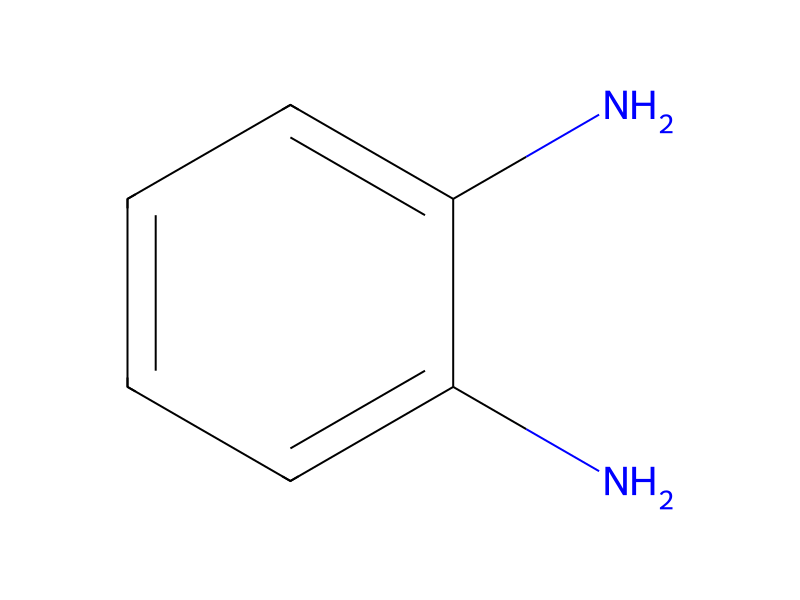

Produkt 1

Reagenzien, Katalysatoren, Lösungsmittel 1

Reaktionsbedingungen
- Temperatur
- 50 °C
Versuchsvorschrift
For example, in synthetic route `A2` of FIG. 2, 4,4'-difluorobenzil, 1,2-phenylenediamine and chloroform are charged together in a reaction vessel and stirred. A catalytic amount of trifluoroacetic acid is added slowly and the reaction mixture heated to about 50° C. with continued stirring. After about 16 h, the mixture is cooled to provide 2,3-bis(4-fluorophenyl)quinoxaline after removal of the chloroform. Recrystallization results 2,3-bis(4-fluorophenyl)quinoxaline having a melting point of 127-1290° C.
Aufarbeitung
- temperaturethe mixture is cooled
Quellen und Nachweise
- ORD-Eintrag
- ord-64a4ef4dedde49bfa63dd084a1b36a6c
- Quelldatensatz
- uspto-grants-2000_09
- Patentnummer
- US06124421
Verknüpfte Notizen
Wird geladen…