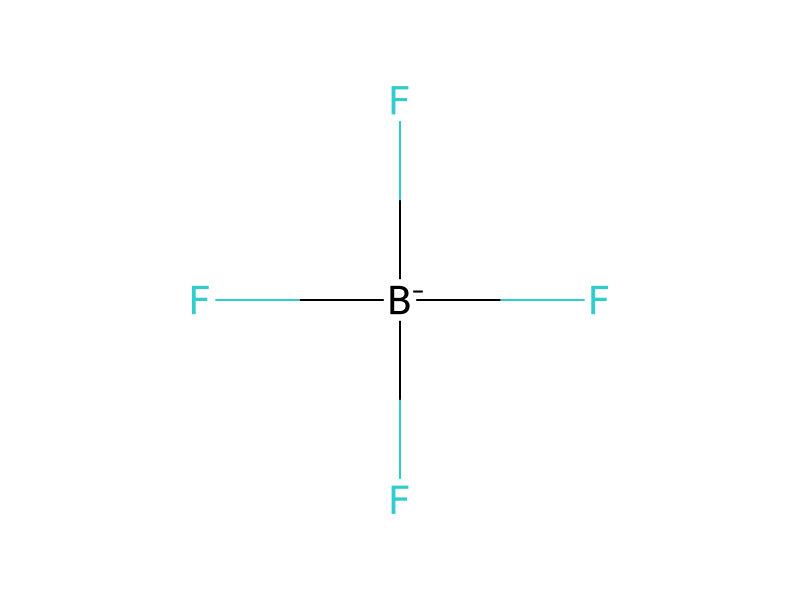
Tetrafluoroborate → 1-(1-Benzyl-2-pyrrolidylidene)-3-(4-methylthiophenyl)urea
HRID 1973939
Reaktionsgleichung

F[B-](F)(F)F.[CH2:6]([N:13]1[CH2:17][CH2:16][CH2:15][C:14]1=[NH:18])[C:7]1[CH:12]=[CH:11][CH:10]=[CH:9][CH:8]=1.[CH3:19][S:20][C:21]1[CH:26]=[CH:25][C:24]([N:27]=[C:28]=[O:29])=[CH:23][CH:22]=1>>[CH2:6]([N:13]1[CH2:17][CH2:16][CH2:15][C:14]1=[N:18][C:28]([NH:27][C:24]1[CH:25]=[CH:26][C:21]([S:20][CH3:19])=[CH:22][CH:23]=1)=[O:29])[C:7]1[CH:12]=[CH:11][CH:10]=[CH:9][CH:8]=1Komponenten
4


Versuchsvorschrift
The fluoroborate salt of 1-benzyl-2-iminopyrrolidine (6.55 g.; 0.025 mole) is converted to the free base (4.36 g.; 0.025 mole) in the usual manner. After drying over K2CO3, the benzene solution is filtered through diatomaceous earth and 4.13 g. (0.025 mole) of 4-methylthiophenylisocyanate is added. The reaction mixture is stirred at room temperature for 1 hour and then evaporated to dryness in vacuo to give an oil which crystallizes. Recrystallizations from acetone-ether yields the pure product, 1-(1-benzyl-2-pyrrolidylidene)-3-(4 -methylthiophenyl)urea, m.p. = 113°-115° C.