StartseiteMCPWorkbenchSkills
StartseiteWorkbenchBenachrichtigungenMein Bereich
llms.txt · MCP-AnleitungDatenschutz · Nutzungsbedingungen · Supportv1.8.0
  1. Startseite
  2. /Reaktion

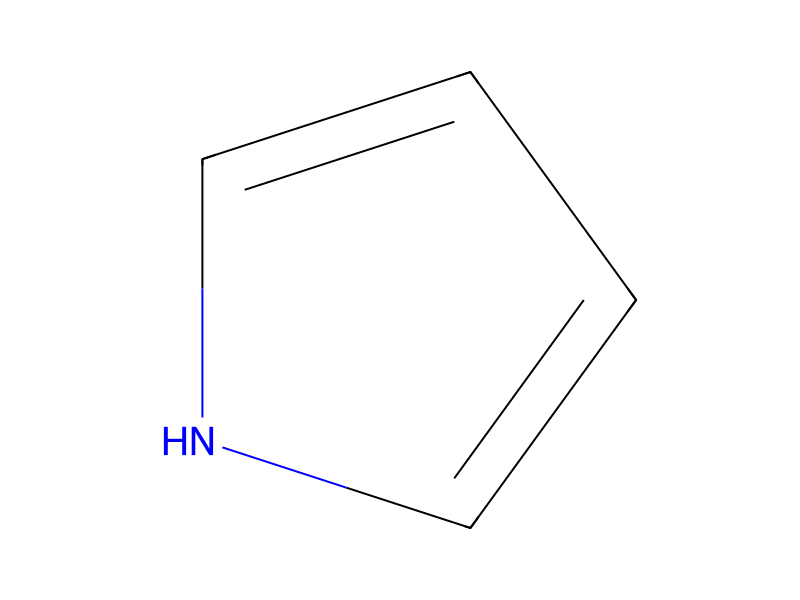
Pyrrole → HCID 68968622, Verbindung

HRID 1985596
Notizen
Druckvorschau

Reaktionsgleichung

Reaktionsgleichung von HRID 1985596
[CH3:1][O:2][C:3]([C:5]1[N:6]([CH2:16][C:17]2[CH:22]=[CH:21][CH:20]=[CH:19][CH:18]=2)[C:7]([C:12]([O:14][CH3:15])=[O:13])=[C:8]([OH:11])[C:9]=1[OH:10])=[O:4].N1[CH:27]=[CH:26][CH:25]=[CH:24]1.[C:28]1(P(C2C=CC=CC=2)C2C=CC=CC=2)C=CC=C[CH:29]=1.N(C(OCC)=O)=N[C:49](OCC)=O>O1CCCC1>[CH3:1][O:2][C:3]([C:5]1[N:6]([CH2:16][C:17]2[CH:18]=[CH:19][CH:20]=[CH:21][CH:22]=2)[C:7]([C:12]([O:14][CH3:15])=[O:13])=[C:8]2[C:9]=1[O:10][CH2:49][C:25]([CH2:28][CH3:29])([CH2:26][CH3:27])[CH2:24][O:11]2)=[O:4]
KomponentenVersuchsvorschriftAufarbeitungQuellen und NachweiseNotizen zur Reaktion

Komponenten

6

Edukt 4

HCID 8027PyrroleHCID 11776TriphenylphosphineHCID 220568ethyl N-ethoxycarbonyliminocarbamateHCID 4866738Dimethyl 1-benzyl-3,4-dihydroxy-1H-pyrrole-2,5-dicarboxylate

Produkt 1

HCID 68968622HCID 68968622, Verbindung

Reagenzien, Katalysatoren, Lösungsmittel 1

HCID 8028
Tetrahydrofuran
Lösungsmittel

Versuchsvorschrift

In the present method, 1-Benzyl-3,4-dihydroxy-1H-pyrrole-2,5-dicarboxylic acid dimethyl ester, the pyrrole derivative labeled A4 in FIG. 4 (hereinafter referred to as compound A4) is first synthesized from commercially available chemicals according to prior art techniques (see A. Merz, R. Schropp, E. Dotterl, “3,4-Dialkoxypyrroles and 2,3,7,8,12,13,17,18-Octaalkoxyporphyrins”, Synthesis, 7, pp. 795-800, (1995)). Then, a solution of compound A4,2,2-diethyl-1,3-propanediol (labeled B4 in FIG. 4), triphenylphosphine (PPh3; labeled C4 in FIG. 4), and diethyl azodicarboxylate (DEAD; labeled D4 in FIG. 4) is refluxed in tetrahydrofuran (THF) for about 10-20 hours (preferably under an inert atmosphere). The reaction mixture is then quenched using a small amount of water, mixed with silica gel, and evaporated to dryness. The resulting material is loaded into a silica gel column and eluded by hexane and dichloromethane (1:1 volume ratio) to yield 2-Benzyl-6,6-diethyl-6,7-dihydro-2H,5H-4,8-dioxa-2-aza-azulene-1,3-dicarboxylic acid dimethyl ester, the pyrrole derivative labeled E4 in FIG. 4 (hereinafter referred to as compound E4).

Aufarbeitung

  1. customis first synthesized from commercially available chemicals
  2. customThe reaction mixture is then quenched
  3. additionmixed with silica gel
  4. customevaporated to dryness

Quellen und Nachweise

ORD-Eintrag
ord-42586df3453b4f518ed640a549e38913
Quelldatensatz
uspto-grants-2009_06
DOI
10.6084/m9.figshare.5104873.v1
Patentnummer
US07547658B2

Notizen zur Reaktion

Wird geladen…

Auf dieser SeiteKomponentenVersuchsvorschriftAufarbeitungQuellen und NachweiseNotizen zur Reaktion