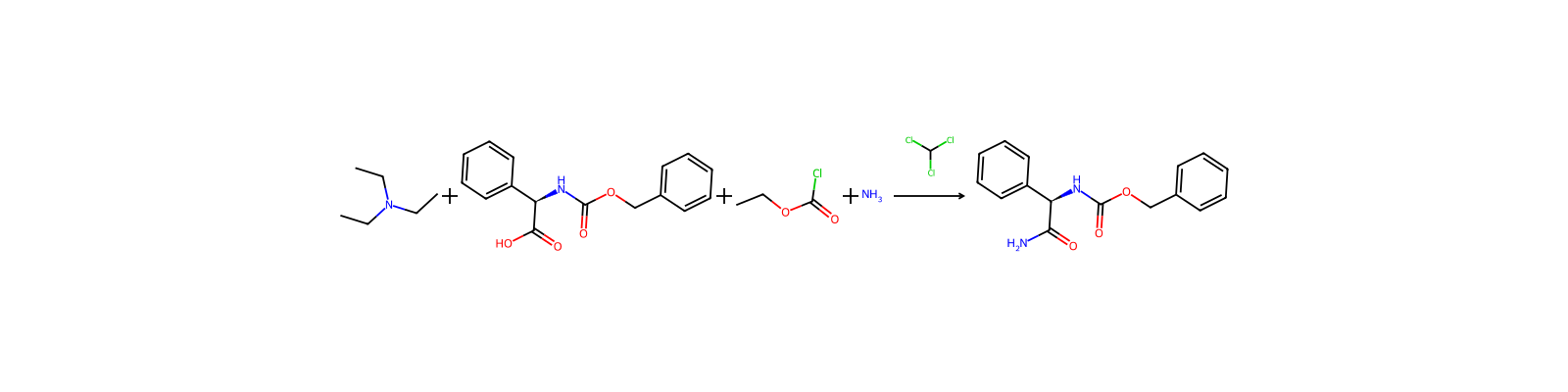
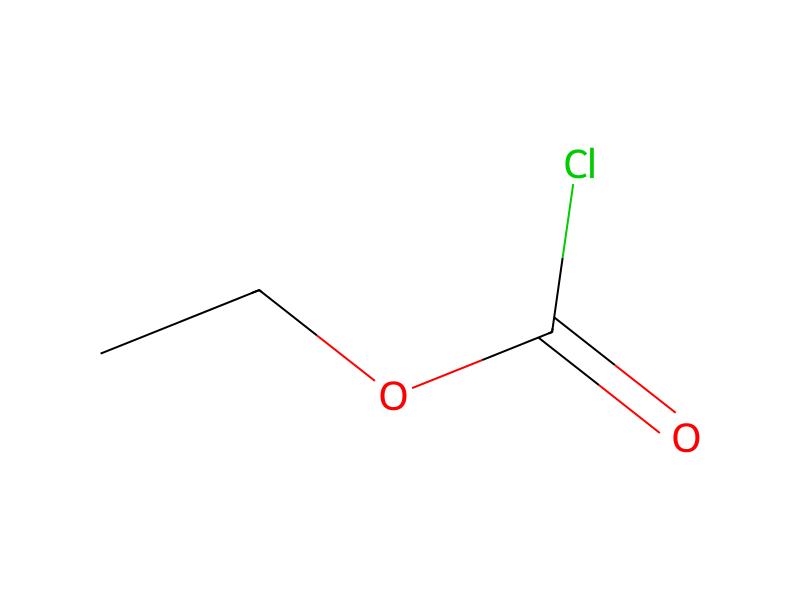
C([N:3](CC)CC)C.[NH:8]([C:19]([O:21][CH2:22][C:23]1[CH:28]=[CH:27][CH:26]=[CH:25][CH:24]=1)=[O:20])[C@@H:9]([C:16](O)=[O:17])[C:10]1[CH:15]=[CH:14][CH:13]=[CH:12][CH:11]=1.C(Cl)(=O)OCC.N>C(Cl)(Cl)Cl>[NH:8]([C:19]([O:21][CH2:22][C:23]1[CH:28]=[CH:27][CH:26]=[CH:25][CH:24]=1)=[O:20])[C@@H:9]([C:16]([NH2:3])=[O:17])[C:10]1[CH:15]=[CH:14][CH:13]=[CH:12][CH:11]=111.6 ml (84 mmoles) of triethylamine are added to a solution of 24.0 g (84 mmoles) of Z-D-Phg-OH in 170 ml of chloroform, and 8.9 ml (84 mmoles) of ethyl chlorocarbonate are added dropwise to the mixture at -10° C. The solution of the mixed anhydride is stirred for additional 10 minutes at -10° C., thereafter cooling is stopped, and gaseous ammonia is introduced into the mixture for one hour. Next day the reaction mixture is evaporated in vacuo, and the solid residue is isolated with water. The crude product is crystallized from ethanol. 11.8 g (49.4%) of Z-D-Phg-NH2 are obtained; the chromatographically uniform substance melts at 171°-173° C. Rf4 : 0.75, [α]D =-76.8° (c=1.0, in dimethyl formamide).