StartseiteMCPWorkbenchSkills
StartseiteWorkbenchBenachrichtigungenMein Bereich
llms.txt · MCP-AnleitungDatenschutz · Nutzungsbedingungen · Supportv1.8.3
  1. Startseite
  2. /Reaktion

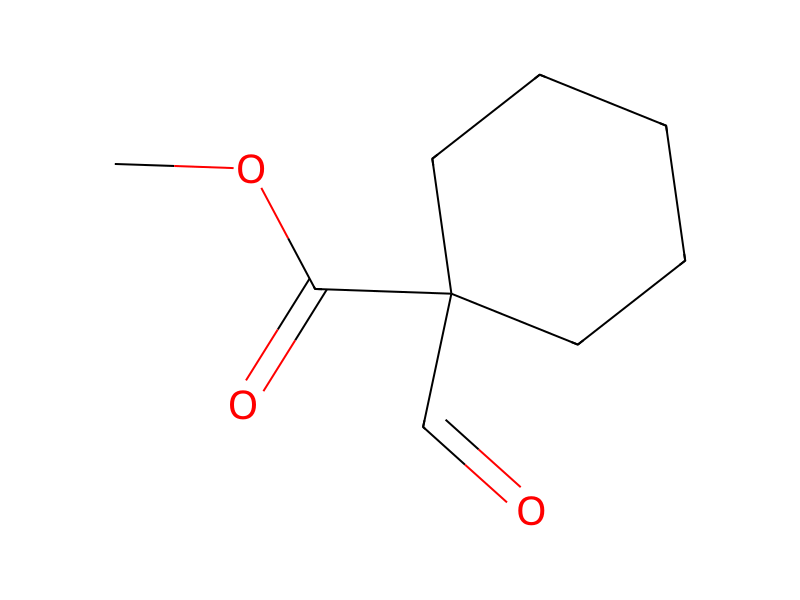
Dimethyl Cyclohexane-1,1-dicarboxylate → Methyl 1-formylcyclohexane-1-carboxylate

HRID 2055171
Drucken

Reaktionsgleichung

Reaktionsgleichung von HRID 2055171
[C:1]1([C:11](OC)=[O:12])([C:7]([O:9][CH3:10])=[O:8])[CH2:6][CH2:5][CH2:4][CH2:3][CH2:2]1.[H-].C([Al+]CC(C)C)C(C)C>ClCCl>[CH3:10][O:9][C:7]([C:1]1([CH:11]=[O:12])[CH2:2][CH2:3][CH2:4][CH2:5][CH2:6]1)=[O:8]
KomponentenVersuchsvorschriftAufarbeitungQuellen und NachweiseNotizen zur Reaktion

Komponenten

4

Edukt 2

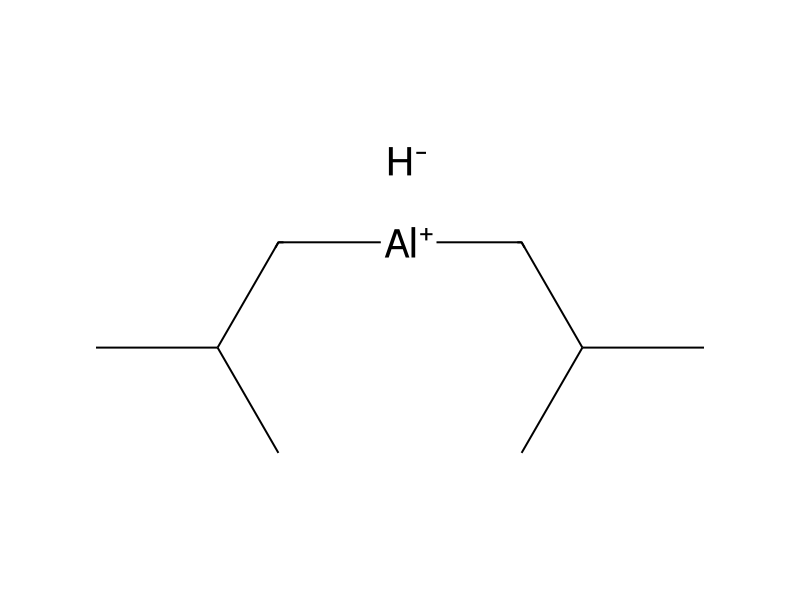
HCID 10965525Dimethyl Cyclohexane-1,1-dicarboxylateHCID 21225700Diisobutylaluminumhydride

Produkt 1

HCID 10866761Methyl 1-formylcyclohexane-1-carboxylate

Reagenzien, Katalysatoren, Lösungsmittel 1

HCID 6344DichloromethaneLösungsmittel

Versuchsvorschrift

To a solution of dimethyl cyclohexane-1,1-dicarboxylate (2.8 g, 14.0 mmol) in dichloromethane(55 mL) at −78° C. under a nitrogen atmosphere was added diisobutylaluminum hydride (1.5M in toluene, 19 mL, 28 mmol) dropwise. After 3 h, the reaction mixture was quenched with saturated aqueous NH4Cl solution (11 mL), then 1N HCl (14 mL) and allowed to warm to room temperature. The mixture was filtered through Celite@ and the organic phase was separated, was dried (MgSO4) and was evaporated in vacuo to yield the title compound which was used without further purification (1.23 g, 52%). MH+171.

Aufarbeitung

  1. customthe reaction mixture was quenched with saturated aqueous NH4Cl solution (11 mL)
  2. filtrationThe mixture was filtered through Celite@
  3. customthe organic phase was separated
  4. dry with materialwas dried (MgSO4)
  5. customwas evaporated in vacuo

Quellen und Nachweise

ORD-Eintrag
ord-5add2efb9ea145cd9eb04eb4ba22b64f
Quelldatensatz
uspto-grants-2008_02
DOI
10.6084/m9.figshare.5104873.v1
Patentnummer
US07332485B2

Notizen zur Reaktion

Auf dieser SeiteKomponentenVersuchsvorschriftAufarbeitungQuellen und NachweiseNotizen zur Reaktion