3-Pyridin-2-yl-L-alanine → HCID 45256701, Verbindung
Reaktionsgleichung

Cl[C:2]1[C:11]([C:12]([OH:14])=[O:13])=[CH:10][C:9]2[C:4](=[CH:5][CH:6]=[C:7]([Cl:15])[CH:8]=2)[N:3]=1.[NH2:16][CH:17]([CH2:21][C:22]1[CH:27]=[CH:26][CH:25]=[CH:24][N:23]=1)[C:18]([OH:20])=[O:19]>CS(C)=O>[C:18]([CH:17]([NH:16][C:2]1[C:11]([C:12]([OH:14])=[O:13])=[CH:10][C:9]2[C:4](=[CH:5][CH:6]=[C:7]([Cl:15])[CH:8]=2)[N:3]=1)[CH2:21][C:22]1[CH:27]=[CH:26][CH:25]=[CH:24][N:23]=1)([OH:20])=[O:19]Komponenten
4
Edukt 2

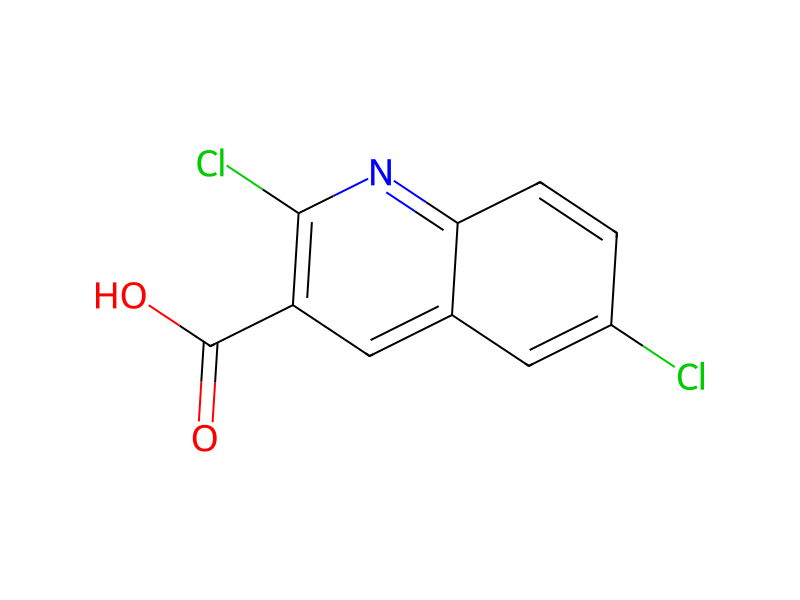
Produkt 1

Reagenzien, Katalysatoren, Lösungsmittel 1

Versuchsvorschrift
In close analogy to the procedure described in Example 1, 2,6-dichloroquinoline-3-carboxylic acid is reacted with 2-amino-3-pyridin-2-yl-propionic acid in DMSO to provide the title compound in good yield.
Quellen und Nachweise
- ORD-Eintrag
- ord-c6ce8f5287f44c179991710dc57f2ee2
- Quelldatensatz
- uspto-grants-2012_10
- Patentnummer
- US08288549B2
Notizen zur Reaktion
Wird geladen…