StartseiteMCPSkillsWorkbenchOpenChem
StartseiteWorkbenchBenachrichtigungenMein Bereich
llms.txt · skill.md · MCP-AnleitungDatenschutz · Nutzungsbedingungen · Supportv1.8.5
  1. Startseite
  2. /Reaktion

Potassium Carbonate → 4-{3-[2-(Benzhydrylidene-amino)-4-phenyl-quinolin-7-ylsulfanyl]-phenyl}-tetrahydro-pyran-4-carbonitrile

HRID 2075663
Drucken

Reaktionsgleichung

[C:1](=[N:14][C:15]1[CH:24]=[C:23](Cl)[C:22]2[C:17](=[CH:18][C:19]([S:26][C:27]3[CH:28]=[C:29]([C:33]4([C:39]#[N:40])[CH2:38][CH2:37][O:36][CH2:35][CH2:34]4)[CH:30]=[CH:31][CH:32]=3)=[CH:20][CH:21]=2)[N:16]=1)([C:8]1[CH:13]=[CH:12][CH:11]=[CH:10][CH:9]=1)[C:2]1[CH:7]=[CH:6][CH:5]=[CH:4][CH:3]=1.[C:41]1(B(O)O)[CH:46]=[CH:45][CH:44]=[CH:43][CH:42]=1.C(=O)([O-])[O-].[K+].[K+]>O1CCOCC1.C1C=CC([P]([Pd]([P](C2C=CC=CC=2)(C2C=CC=CC=2)C2C=CC=CC=2)([P](C2C=CC=CC=2)(C2C=CC=CC=2)C2C=CC=CC=2)[P](C2C=CC=CC=2)(C2C=CC=CC=2)C2C=CC=CC=2)(C2C=CC=CC=2)C2C=CC=CC=2)=CC=1>[C:1](=[N:14][C:15]1[CH:24]=[C:23]([C:41]2[CH:46]=[CH:45][CH:44]=[CH:43][CH:42]=2)[C:22]2[C:17](=[CH:18][C:19]([S:26][C:27]3[CH:28]=[C:29]([C:33]4([C:39]#[N:40])[CH2:38][CH2:37][O:36][CH2:35][CH2:34]4)[CH:30]=[CH:31][CH:32]=3)=[CH:20][CH:21]=2)[N:16]=1)([C:8]1[CH:13]=[CH:12][CH:11]=[CH:10][CH:9]=1)[C:2]1[CH:7]=[CH:6][CH:5]=[CH:4][CH:3]=1
KomponentenReaktionsbedingungenVersuchsvorschriftAufarbeitungQuellen und NachweiseNotizen zur Reaktion

Komponenten

6

Edukt 3

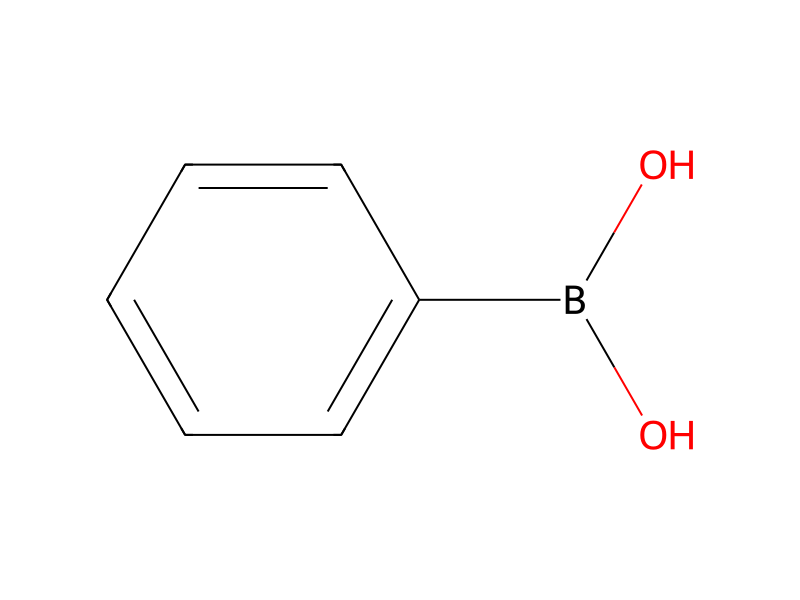
HCID 11430Potassium CarbonateHCID 66827Phenylboronic AcidHCID 866138264-{3-[2-(Benzhydrylidene-amino)-4-chloro-quinolin-7-ylsulfanyl]-phenyl}-tetrahydro-pyran-4-carbonitrile

Produkt 1

HCID 866138274-{3-[2-(Benzhydrylidene-amino)-4-phenyl-quinolin-7-ylsulfanyl]-phenyl}-tetrahydro-pyran-4-carbonitrile

Reagenzien, Katalysatoren, Lösungsmittel 2

HCID 178418397
HCID 178418397, Verbindung
Katalysator
HCID 312751,4-DioxaneLösungsmittel

Reaktionsbedingungen

Temperatur
90 °C

Versuchsvorschrift

1r (100 mg, 0.18 mmol), phenylboronic acid (26 mg, 0.21 mmol), Pd(PPh3)4 (20 mg, 0.02 mmol), and potassium carbonate (50 mg, 0.36 mmol) was dissolved in 1,4-dioxane and water and degassed with N2. The mixture was heated to 90° C. until no starting material was seen by tlc analysis. The reaction was cooled to room temperature, and the aqueous layer was extracted with EtOAc. The combined organic layers were dried over MgSO4, filtered, and concentrated, and the residue was purified by silica gel chromatography to give the desired product, 1s.

Aufarbeitung

  1. customwater and degassed with N2
  2. temperatureThe reaction was cooled to room temperature
  3. extractionthe aqueous layer was extracted with EtOAc
  4. dry with materialThe combined organic layers were dried over MgSO4
  5. filtrationfiltered
  6. concentrationconcentrated
  7. customthe residue was purified by silica gel chromatography

Quellen und Nachweise

ORD-Eintrag
ord-01adbc05cbf84216b961eb1c119e7a24
Quelldatensatz
uspto-grants-2011_04
DOI
10.6084/m9.figshare.5104873.v1
Patentnummer
US07919621B2

Notizen zur Reaktion

Auf dieser SeiteKomponentenReaktionsbedingungenVersuchsvorschriftAufarbeitungQuellen und NachweiseNotizen zur Reaktion