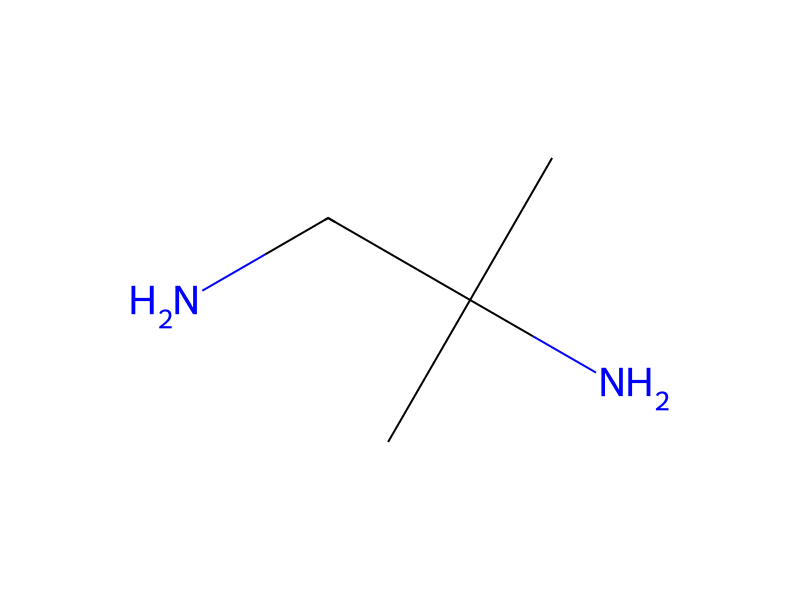
C(N(CC)CC)C.[NH2:8][CH2:9][C:10]([NH2:13])([CH3:12])[CH3:11].[CH2:14]([O:21][C:22]1[CH:31]=[C:30]2[C:25]([C:26](Cl)=[C:27]([N+:32]([O-:34])=[O:33])[CH:28]=[N:29]2)=[CH:24][CH:23]=1)[C:15]1[CH:20]=[CH:19][CH:18]=[CH:17][CH:16]=1>ClCCl>[NH2:13][C:10]([CH3:12])([CH3:11])[CH2:9][NH:8][C:26]1[C:25]2[C:30](=[CH:31][C:22]([O:21][CH2:14][C:15]3[CH:20]=[CH:19][CH:18]=[CH:17][CH:16]=3)=[CH:23][CH:24]=2)[N:29]=[CH:28][C:27]=1[N+:32]([O-:34])=[O:33]Triethylamine (12.8 mL, 92.0 mmol) and 1,2-diamino-2-methylpropane (5.29 mL, 50.6 mmol) were added sequentially to a solution of 7-benzyloxy-4-chloro-3-nitroquinoline (14.5 g, 46.0 mmol) in dichloromethane (400 mL). The reaction mixture was stirred overnight and then concentrated under reduced pressure. The residue was partitioned between water (200 mL) and dichloromethane (300 mL). The organic layer was washed with brine, dried over sodium sulfate, and then concentrated under reduced pressure to provide crude product as a brown solid. The crude product was passed through a layer of silica gel (eluting sequentially with chloroform and 96:4 chloroform:methanol) to provide 12.4 g of (2-amino-2-methylpropyl)(7-benzyloxy-3-nitroquinolin-4-yl)amine as a yellow solid.