(S)-2-Cyclopropyl-2-(((S)-1-phenylethyl)amino)acetic acid → HCID 44596483, Verbindung
HRID 2079502
Reaktionsgleichung

[CH:1]1([C@H:4]([NH:8][C@H:9]([C:11]2[CH:16]=[CH:15][CH:14]=[CH:13][CH:12]=2)[CH3:10])[C:5](O)=[O:6])[CH2:3][CH2:2]1.CSC.B>C1COCC1>[CH:1]1([C@H:4]([NH:8][C@H:9]([C:11]2[CH:12]=[CH:13][CH:14]=[CH:15][CH:16]=2)[CH3:10])[CH2:5][OH:6])[CH2:3][CH2:2]1Komponenten
4
Edukt 2

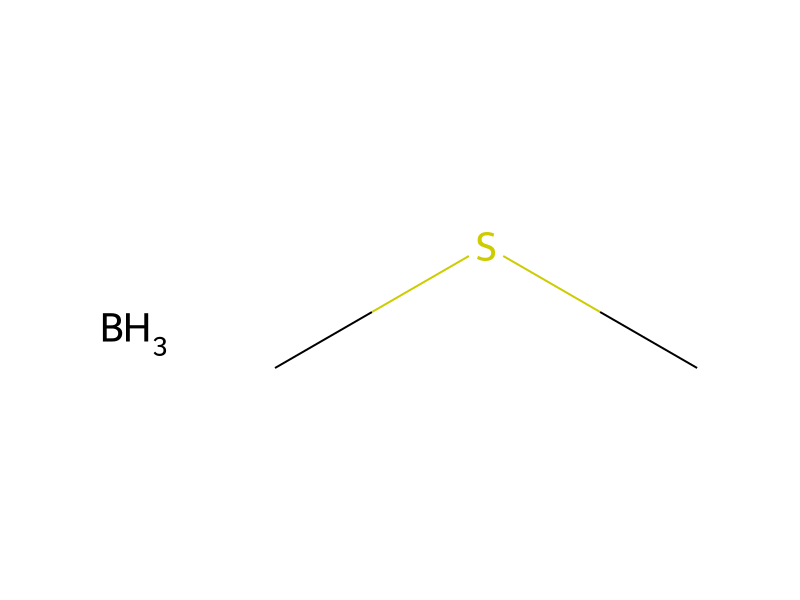
Produkt 1

Reagenzien, Katalysatoren, Lösungsmittel 1

Versuchsvorschrift
To a solution of (S)-2-cyclopropyl-2-[(S)-1-phenylethylamino]acetic acid (400 g, 1.82 mol) in dry THF (5.2 L) at 0° C. was added borane dimethylsulfide (neat) (485 g, 6.39 mol) with vigorous stirring. The reaction mixture was stirred overnight at room temperature. Reaction progress was monitored by HPLC. Stirring was continued until the acid was consumed completely (18-20 h). Upon completion the reaction mixture was cooled to 0° C. and methanol (6 L) was added dropwise. The mixture was concentrated under vacuum and the residue was dissolved in chloroform (5 L). The organic layer was washed with 10% aqueous NaHCO3 solution (2×1 L) followed by brine, dried over Na2SO4, filtered and concentrated to afford a tan-yellow oil. The oil was distilled under reduced pressure to afford (S)-2-cyclopropyl-2-[(S)-1-phenylethylamino]ethanol (166 g, 44% yield) as a colorless oil: bp 175-184° C., 0.1 mm Hg; [α]25D−52.1 (c 1.0, CHCl3); 1H NMR (400 MHz, CDCl3) δ 1H NMR (400 MHz, CDCl3) δ 7.33-7.20 (m, 5H), 3.91-3.86 (m, 1H), 3.67 (dd, JAB=10.6, JAX=3.8 Hz, 1H), 3.39 (dd, JBA=10.6, JBX=4.3 Hz, 1H), 2.40 (s br, 2H), 1.70-1.65 (m, 1H), 1.35 (d, J=6.6 Hz, 3H), 0.88-0.82 (m, 1H), 0.47-0.37 (m, 2H), 0.05-0.06 (m, 2H); 13C NMR (100 MHz, DMSO-d6) δ 146.8, 127.6, 126.2, 125.9, 63.0, 60.5, 54.4, 24.4, 13.3, 3.0, 1.5; LRMS (ESI) m/e 206.3 [(M+H)+, calcd for C13H20NO 206.2].