2,4-Dichlorophenol → HCID 86746556, Verbindung
HRID 2082129
Reaktionsgleichung

[Br:1][CH2:2][C:3]1[CH:13]=[CH:12][C:6]([O:7]CC(O)=O)=[CH:5][CH:4]=1.[Cl:14][C:15]1[CH:20]=[C:19]([Cl:21])[CH:18]=[CH:17][C:16]=1O.C1(N=C=NC2CCCCC2)CCCCC1.[C:38]([O:41]CC)(=[O:40])[CH3:39]>>[C:38]([O:41][O:7][C:6]1[CH:5]=[CH:4][C:3]([CH2:2][Br:1])=[CH:13][C:12]=1[C:18]1[CH:17]=[CH:16][C:15]([Cl:14])=[CH:20][C:19]=1[Cl:21])(=[O:40])[CH3:39]Komponenten
5
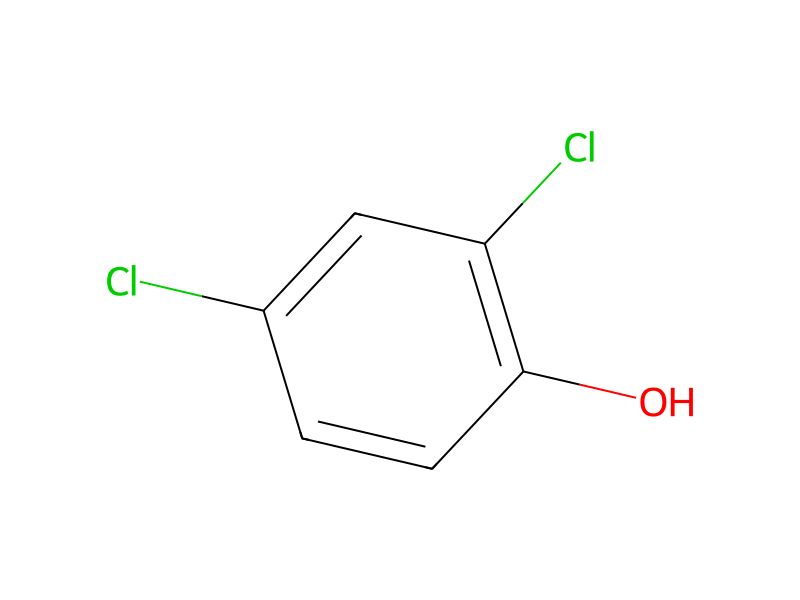




Versuchsvorschrift
To 4-bromomethylphenoxyacetic acid (20 g, 81.6 mole) and 2,4-dichlorophenol (14 g, 85.7 mole) suspended in 100 ml ethyl acetate at 0° C. was added solid dicyclohexylcarbodiimide (17.7 g, 85.8 mole) in portions with stirring. After two hours at 0° C., 200 ml of ethyl acetate was added to the thick suspension that resulted, and stirring was allowed to proceed for 30 minutes as the mixture was allowed to warm to room temperature. Insoluble dicyclohexylurea was removed by filtration and was washed with ethyl acetate (3×30 ml). The combined filtrate and washes were concentrated in vacuo and the residue was dissolved in 35 ml boiling ethyl acetate. Upon cooling to room temperature, crystalline product had formed. After addition of 155 ml hexanes in portions with mixing, the product was collected by vacuum filtration, washed with hexanes/ethyl acetate (9:1), and dried in vacuo to yield 26.8 g (85%) of crystalline product (mp 114°-6° C.). The product was homogeneous by TLC (silica gel 60) and had an Rf =0.50 when developed with hexanes:ethyl acetate (8:2).