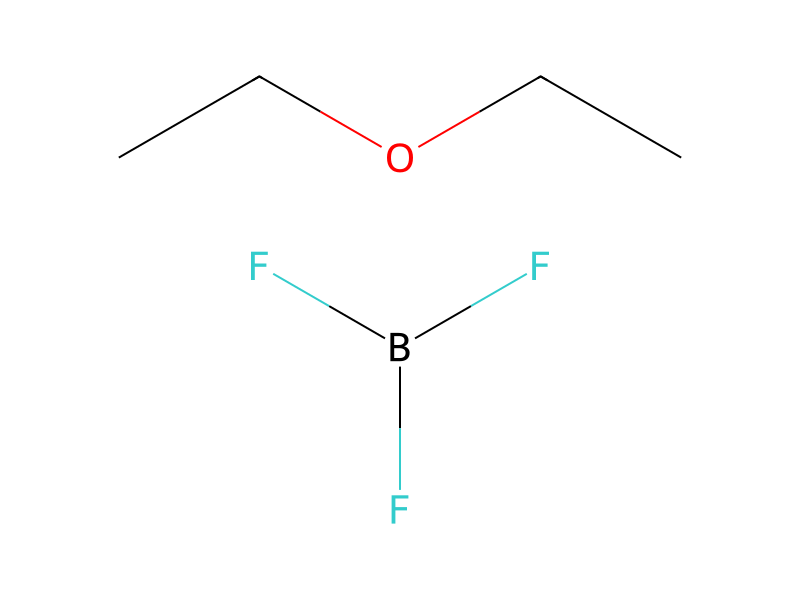
To a solution of trimethyl hydroquinone (3 g) in 100 mL dioxane at room temperature, was added BF3.Et2O (4.26 g). While stirring, a solution of 1-vinylcyclobutanol (1.96 g) in 20 mL dioxane was added dropwise to the mixture. The reaction was stirred for 1 h and quenched by pouring onto ice (50 g). The aqueous layer was saturated with NaCl and extracted with 3:1 hexane/EtOAc. The combined organic phase was washed with brine and NaHCO3 solution, concentrated and diluted with EtOH (30 mL). 10% FeCl3 aqueous solution (40 mL) was added to the solution and the mixture was stirred for 2 h at room temperature. The mixture was diluted with hexane/EtOAc (4:1, 80 mL) and the aqueous layer was saturated with NaCl. After layer separation, the organic layer was washed with brine, dried over Na2SO4 and concentrated. The crude product was chromatographed to afford 2-(2-cyclobutylideneethyl)-3,5,6-trimethylbenzo-1,4-quinone (2.1 g). MS m/z=231 (M−OH).