Reaktionsgleichung

[C:1]([NH:20][C:21]1[S:22][CH:23]=[C:24]([CH:26]=O)[N:25]=1)([C:14]1[CH:19]=[CH:18][CH:17]=[CH:16][CH:15]=1)([C:8]1[CH:13]=[CH:12][CH:11]=[CH:10][CH:9]=1)[C:2]1[CH:7]=[CH:6][CH:5]=[CH:4][CH:3]=1.[S:28]1[CH2:32][C:31](=[O:33])[NH:30][C:29]1=[O:34].N1CCCCC1>C(O)C>[C:1]([NH:20][C:21]1[S:22][CH:23]=[C:24]([CH:26]=[C:32]2[S:28][C:29](=[O:34])[NH:30][C:31]2=[O:33])[N:25]=1)([C:14]1[CH:15]=[CH:16][CH:17]=[CH:18][CH:19]=1)([C:8]1[CH:9]=[CH:10][CH:11]=[CH:12][CH:13]=1)[C:2]1[CH:3]=[CH:4][CH:5]=[CH:6][CH:7]=1Komponenten
5
Edukt 3
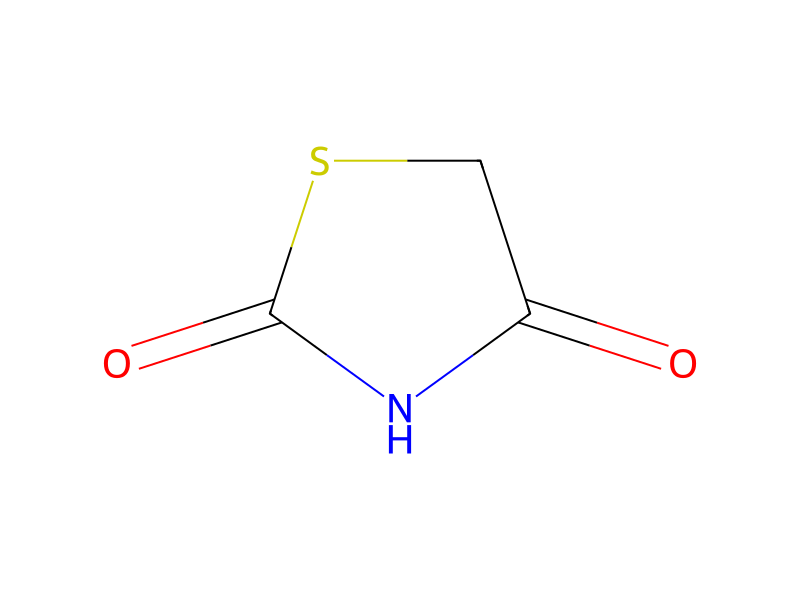


Produkt 1

Reagenzien, Katalysatoren, Lösungsmittel 1

Versuchsvorschrift
Following a procedure similar to that described in Example 17, the desired compound was prepared from 2 g of 2-tritylaminothiazole-4-carbaldehyde, 0.7 g of 2,4-thiazolidinedione, 1 g of piperidine and 20 ml of ethanol. The resulting product was a pale brown powder having the following physical properties.
Quellen und Nachweise
- ORD-Eintrag
- ord-26ad0fcea33d492ba071deefc4fee33c
- Quelldatensatz
- uspto-grants-1990_06
- Patentnummer
- US04933355
Verknüpfte Notizen
Wird geladen…