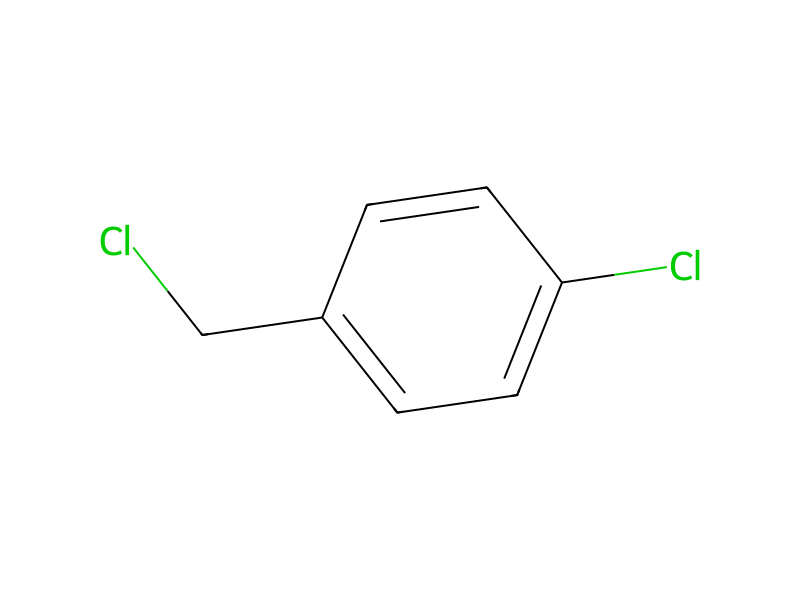
Acetyl chloride (11.7 mL, 0.165 mol) was added to anhydrous EtOH (500 mL) and the mixture was stirred for 30 min at 25° C. Homopiperazine (15.0 g, 0.150 mol) was added and the mixture was heated to reflux for 4 h. 4-Chlorobenzyl chloride (13.96 g, 0.087 mol) was added and the reaction mixture was heated to reflux for 16 h before concentrating. The residue was dissolved in EtOAc (500 mL) and washed with 1N aqueous KOH (50 mL). The aqueous layer was extracted with EtOAc (200 mL). The combined organic layers were dried (MgSO4), filtered and concentrated in vacuo. Chromatography (double separation. SiO2, 20×7 cm, 1PrOH—H2O—NH4OH, 80:12:6 to 70:20:10 gradient elution) afforded the desired product (10.6 g, 53.4%) and the dialkylated homopiperazine (2.36 g, 16.5%). GC/MS m/e 224 (M+, C12H17N2Cl).10% CH3OH—CH2Cl2); RPLC tR=5.96 min (>85%), 220 nm (Mm (Method B): ESI/MS m/e 498.3 (MH++H, C31H35N3O3).