Reaktionsgleichung

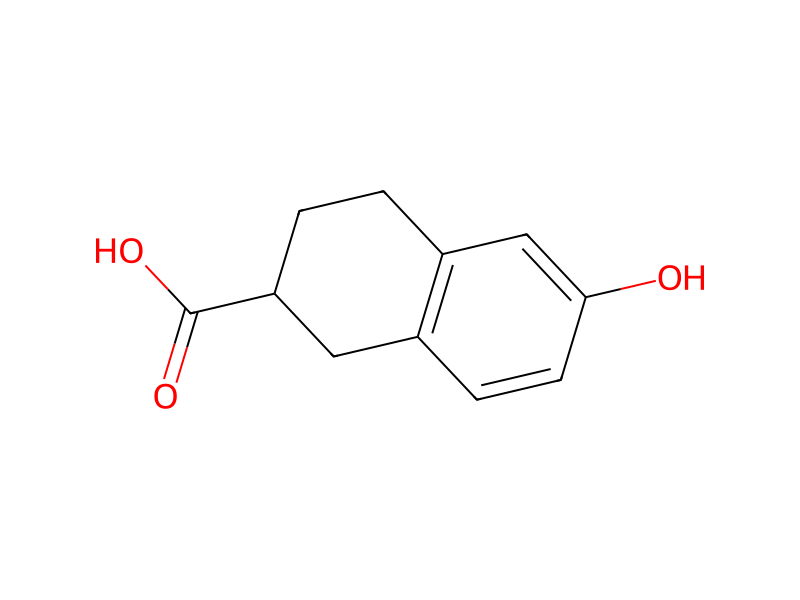
[OH:1][C:2]1[CH:3]=[C:4]2[C:9](=[CH:10][CH:11]=1)[CH2:8][CH:7]([C:12]([OH:14])=[O:13])[CH2:6][CH2:5]2.[CH2:15](Br)[C:16]1[CH:21]=[CH:20][CH:19]=[CH:18][CH:17]=1.[OH-].[K+]>>[CH2:15]([O:1][C:2]1[CH:3]=[C:4]2[C:9](=[CH:10][CH:11]=1)[CH2:8][CH:7]([C:12]([OH:14])=[O:13])[CH2:6][CH2:5]2)[C:16]1[CH:21]=[CH:20][CH:19]=[CH:18][CH:17]=1Komponenten
4



Versuchsvorschrift
The 1,2,3,4-tetrahydro-6-hydroxynaphthalene-2-carboxylic acid obtained in the above is caused to react with benzyl bromide in the presence of potassium hydroxide, to obtain 1,2,3,4-tetrahydro-6-benzyloxynaphthalene-2-carboxylic acid. The compound thus obtained is heated under reflux in the presence of an acid catalyst to obtain 1,2,3,4-tetrahydro-6-benzyloxynaphthalene-2-carboxylic acid methyl ester.
Quellen und Nachweise
- ORD-Eintrag
- ord-2610e29e13d34bda911c6dcb2de9c970
- Quelldatensatz
- uspto-grants-1995_06
- Patentnummer
- US05422039
Verknüpfte Notizen
Wird geladen…