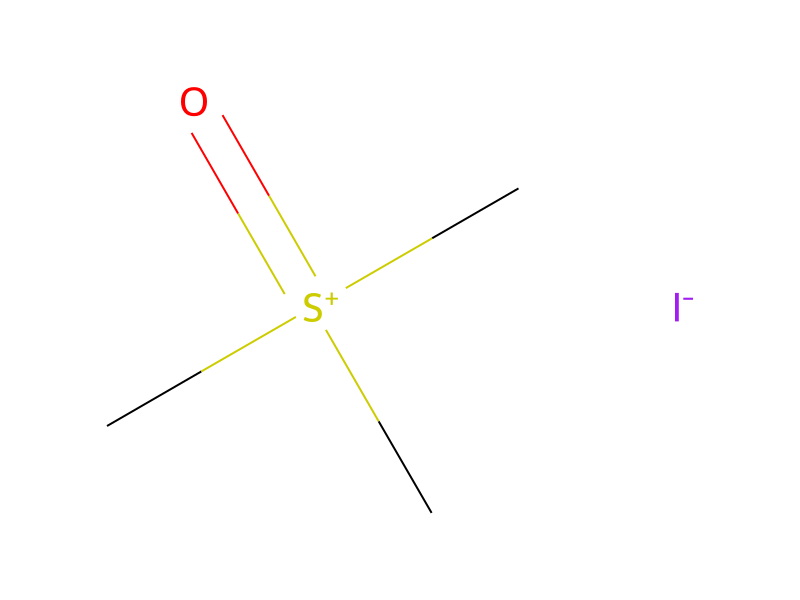
CS(C)=O.[I-].[CH3:6][S+](C)(C)=O.[H-].[Na+].[CH3:13][C:14]([CH3:24])([CH3:23])[C:15]([C:17]1[CH:18]=[N:19][CH:20]=[N:21][CH:22]=1)=[O:16]>O1CCCC1>[C:14]([C:15]1([C:17]2[CH:22]=[N:21][CH:20]=[N:19][CH:18]=2)[CH2:6][O:16]1)([CH3:24])([CH3:23])[CH3:13]Under an atmosphere of argon, 10 ml of dimethyl sulphoxide are slowly added dropwise to 0.96 g (4.3 mmol) of trimethylsulphoxonium iodide and 0.17 g of sodium hydride (60%, 4.3 mmol). The reaction mixture is then stirred at room temperature for 15 min, and 0.65 g (3.9 mmol) of 2,2-dimethyl-1-(5-pyrimidinyl)-1-propanone, dissolved in 2 ml of tetrahydrofuran, is added. The reaction mixture is stirred at 50° C. for 90 min. The reaction mixture is then concentrated under reduced pressure, and saturated aqueous sodium chloride solution and ethyl acetate are added to the residue. The organic phase is separated off, dried over sodium sulphate, filtered and concentrated. This gives 0.70 g (99%) of the desired product, which is reacted without further purification.