StartseiteMCPWorkbenchSkills
StartseiteWorkbenchBenachrichtigungenMein Bereich
llms.txt · MCP-AnleitungDatenschutz · Nutzungsbedingungen · Supportv1.8.0
  1. Startseite
  2. /Reaktion

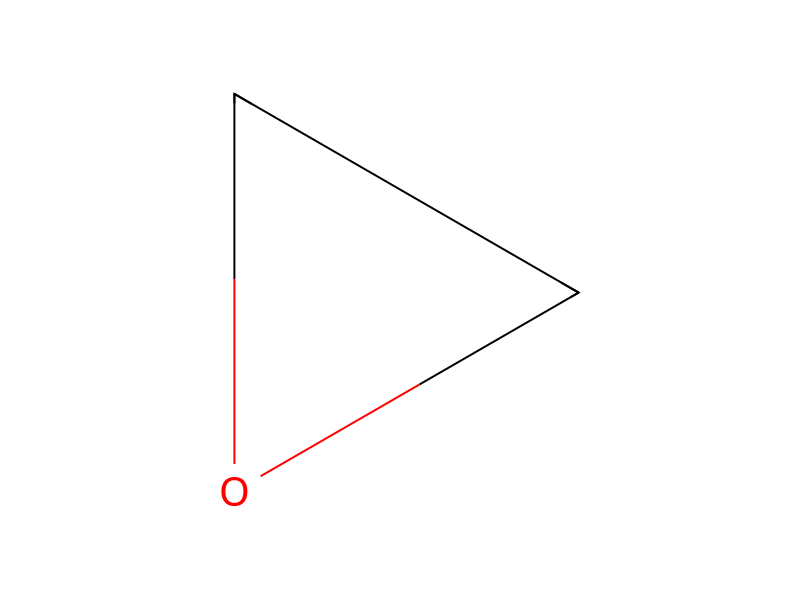
Ethylene Oxide → N-[2-(1,1-Dimethylethoxy)-2-oxoethyl]-N-(2-hydroxyethyl)-L-tryptophan 1,1-dimethylethyl ester

HRID 2185590
Notizen
Druckvorschau

Reaktionsgleichung

Reaktionsgleichung von HRID 2185590
[CH3:1][C:2]([O:5][C:6](=[O:27])[C@H:7]([CH2:17][C:18]1[C:26]2[C:21](=[CH:22][CH:23]=[CH:24][CH:25]=2)[NH:20][CH:19]=1)[NH:8][CH2:9][C:10]([O:12][C:13]([CH3:16])([CH3:15])[CH3:14])=[O:11])([CH3:4])[CH3:3].[CH2:28]1[O:30][CH2:29]1.[O-]S(C(F)(F)F)(=O)=O.[Yb+3].[O-]S(C(F)(F)F)(=O)=O.[O-]S(C(F)(F)F)(=O)=O>CC#N>[CH3:4][C:2]([O:5][C:6](=[O:27])[C@H:7]([CH2:17][C:18]1[C:26]2[C:21](=[CH:22][CH:23]=[CH:24][CH:25]=2)[NH:20][CH:19]=1)[N:8]([CH2:9][C:10]([O:12][C:13]([CH3:14])([CH3:15])[CH3:16])=[O:11])[CH2:28][CH2:29][OH:30])([CH3:1])[CH3:3]
KomponentenReaktionsbedingungenVersuchsvorschriftAufarbeitungQuellen und NachweiseNotizen zur Reaktion

Komponenten

5

Edukt 3

HCID 6354Ethylene OxideHCID 2733225Ytterbium triflateHCID 53674071N-[2-(1,1-Dimethylethoxy)-2-oxoethyl]-L-tryptophan 1,1-dimethylethyl ester

Produkt 1

HCID 69778108N-[2-(1,1-Dimethylethoxy)-2-oxoethyl]-N-(2-hydroxyethyl)-L-tryptophan 1,1-dimethylethyl esterAusbeute 77,3 %

Reagenzien, Katalysatoren, Lösungsmittel 1

HCID 6342
Acetonitrile
Lösungsmittel

Reaktionsbedingungen

Temperatur
-80 °C

Versuchsvorschrift

In a four-necked flask cooled to −80° C. equipped with a mechanical stirrer, a thermometer, and a jacketed dropping funnel N-[2-(1,1-dimethylethoxy)-2-oxoethyl]-L-tryptophan 1,1-dimethylethyl ester (5 g; 13.35 mmol) was dissolved in CH3CN (25 mL). In the dropping funnel, cooled at −80° C., ethylene oxide (13 mL; 0.26 mol) was collected from the cylinder and then quickly dropped into the solution. Solid ytterbium triflate (0.83 g; 1.34 mmol) was added and after removal of the cooling bath the temperature was allowed to rise to r.t. The reaction was monitored by HPLC (Chromatographic method of Example 3, A)). After 15 h the solution was diluted with H2O (50 mL) and extracted with Et2O (150 mL). After evaporation of the solvent the crude was purified by flash chromatography (silica gel; n-hexane/ethyl acetate, 7:3 v/v) giving the desired product (4.32 g; 10.32 mmol).

Aufarbeitung

  1. customequipped with a mechanical stirrer
  2. temperatureIn the dropping funnel, cooled at −80° C.
  3. additionquickly dropped into the solution
  4. customafter removal of the cooling bath the temperature
  5. customto rise to r.t
  6. additionAfter 15 h the solution was diluted with H2O (50 mL)
  7. extractionextracted with Et2O (150 mL)
  8. customAfter evaporation of the solvent the crude
  9. customwas purified by flash chromatography (silica gel; n-hexane/ethyl acetate, 7:3 v/v)

Quellen und Nachweise

ORD-Eintrag
ord-f7a36c515134449da8f567efa37d3746
Quelldatensatz
uspto-grants-2002_06
DOI
10.6084/m9.figshare.5104873.v1
Patentnummer
US06403055B1

Notizen zur Reaktion

Wird geladen…

Auf dieser SeiteKomponentenReaktionsbedingungenVersuchsvorschriftAufarbeitungQuellen und NachweiseNotizen zur Reaktion