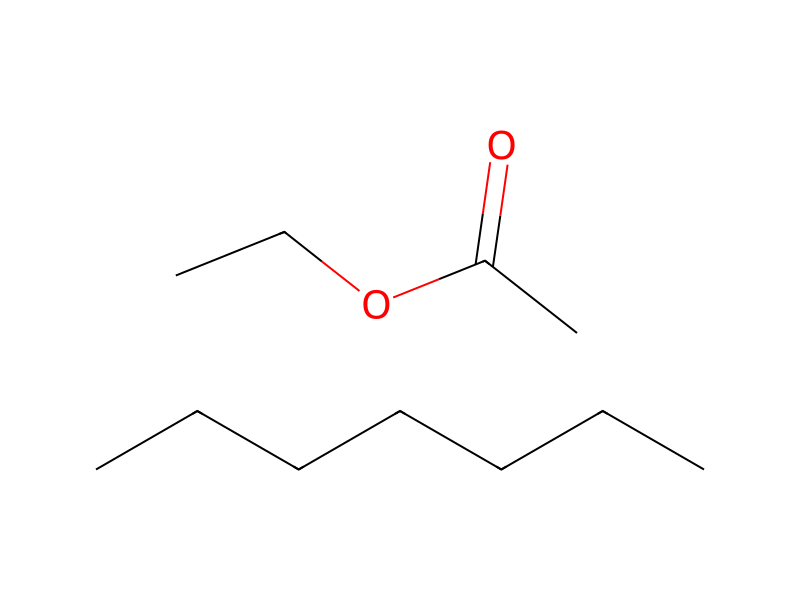
[F:1][C:2]1[N:6]([CH3:7])[N:5]=[C:4]([CH3:8])[C:3]=1[C:9](Cl)=[O:10].[Cl:12][C:13]1[CH:14]=[CH:15][CH:16]=[C:17]2[C:21]=1[CH:20]([NH:22][CH:23]1[CH2:25][CH2:24]1)[CH2:19][CH2:18]2.C(N(CC)CC)C.CCCCCCC.C(OCC)(=O)C>O1CCCC1>[Cl:12][C:13]1[CH:14]=[CH:15][CH:16]=[C:17]2[C:21]=1[CH:20]([N:22]([CH:23]1[CH2:25][CH2:24]1)[C:9]([C:3]1[C:4]([CH3:8])=[N:5][N:6]([CH3:7])[C:2]=1[F:1])=[O:10])[CH2:19][CH2:18]2At ambient temperature, a solution of 0.19 g (1.06 mmol) of 5-fluoro-1,3-dimethyl-1H-pyrazole-4-carbonyl chloride in 3 ml of tetrahydrofurane is added dropwise to a solution of 0.20 g (0.96 mmol) of 7-chloro-N-cyclopropyl-2,3-dihydro-1H-inden-1-amine and 0.15 ml triethylamine in 8 ml tetrahydrofurane. The reaction mixture is stirred for 3 hrs at reflux. The solvent is removed under vacuum and 10 ml of water are then added to the residue. The watery layer is extracted three times with ethyl acetate (3×20 ml); the combined organic layers are dried over magnesium sulphate and concentrated in vacuum. Column chromatography (gradient n-heptane/ethyl acetate) yields 0.26 mg (73% yield) of N-(7-chloro-2,3-dihydro-1H-inden-1-yl)-N-cyclopropyl-5-fluoro-1,3-dimethyl-1H-pyrazole-4-carboxamide as an orange oil (M+1=348).