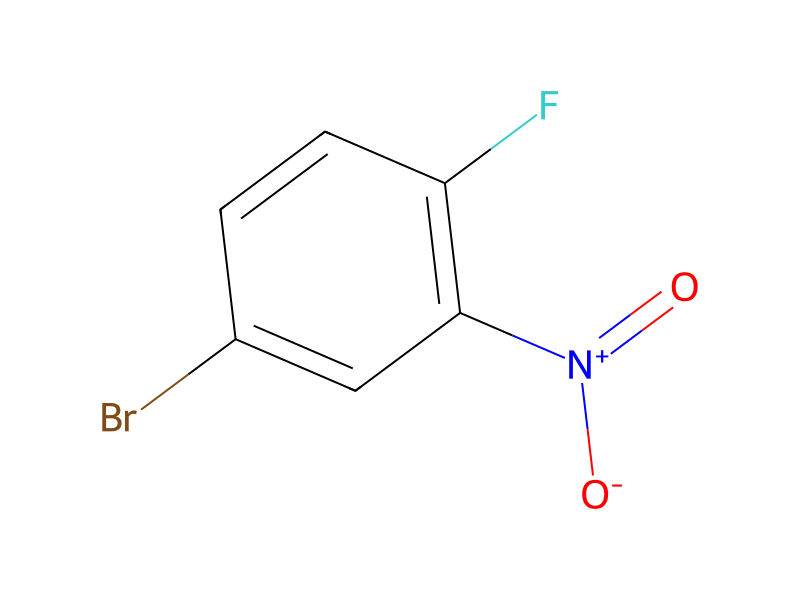
[H-].[Na+].[OH:3][C:4]1([C:7]([O:9][CH2:10][CH3:11])=[O:8])[CH2:6][CH2:5]1.[Br:12][C:13]1[CH:18]=[CH:17][C:16](F)=[C:15]([N+:20]([O-:22])=[O:21])[CH:14]=1>C1COCC1.C1OCCOCCOCCOCCOC1.C(OCC)(=O)C>[Br:12][C:13]1[CH:18]=[CH:17][C:16]([O:3][C:4]2([C:7]([O:9][CH2:10][CH3:11])=[O:8])[CH2:6][CH2:5]2)=[C:15]([N+:20]([O-:22])=[O:21])[CH:14]=1Sodium hydride (60%, 166 mg, 4.15 mmol) was added to a solution of ethyl 1-hydroxycyclopropanecarboxylate (0.41 mL, 3.59 mmol) in THF (10 mL) at room temperature. After 15 min, 3 drops of 15-crown-5 were added followed by 4-bromo-1-fluoro-2-nitrobenzene (0.42 mL, 3.41 mmol). Mixture was stirred at room temperature for 24 hours. After diluting with 50 mL of ethyl acetate, mixture was quenched by addition of brine (25 mL) and layers were separated. Aqueous phase was extracted with ethyl acetate and combined organics were dried (MgSO4), filtered, and concentrated under reduced pressure. Resulting residue was purified via silica gel column chromatography (0-30% ethyl acetate/hexanes) to yield ethyl 1-(4-bromo-2-nitrophenoxy)cyclopropanecarboxylate 7.20 (750 mg)