StartseiteMCPWorkbenchSkills
StartseiteWorkbenchBenachrichtigungenMein Bereich
llms.txt · MCP-AnleitungDatenschutz · Nutzungsbedingungen · Supportv1.8.0
  1. Startseite
  2. /Reaktion

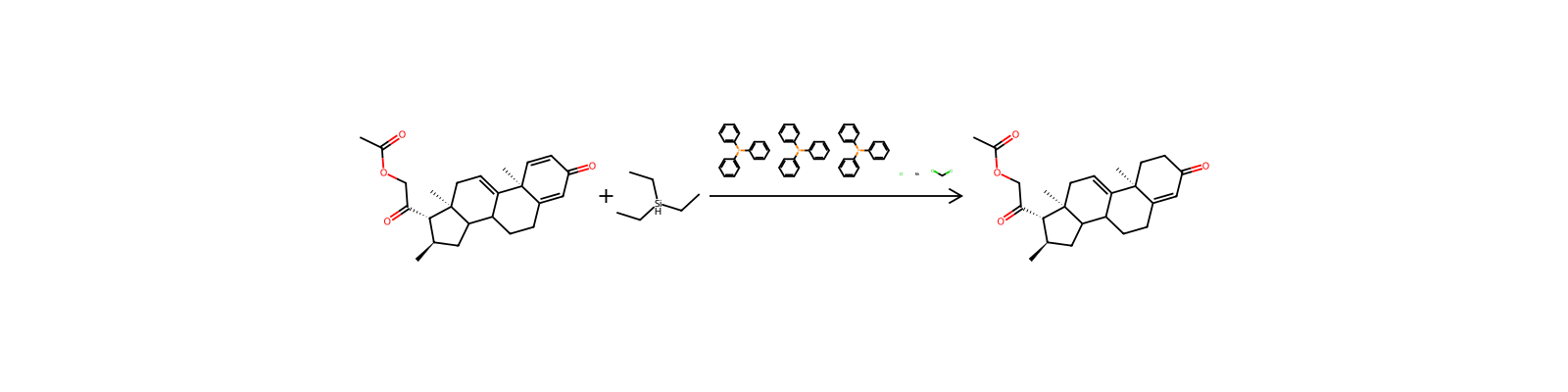
Triethylsilane → 2-oxo-2-((10S,13S,16R,17S)-10,13,16-trimethyl-3-oxo-2,3,6,7,8,10,12,13,14,15,16,17-dodecahydro-1H-cyclopenta[a]phenanthren-17-yl)ethyl acetate

HRID 221197
Notizen
Druckvorschau

Reaktionsgleichung

Reaktionsgleichung von HRID 221197
[C:1]([O:4][CH2:5][C:6](=[O:28])[C@@H:7]1[C@:23]2([CH3:24])[CH:10]([CH:11]3[C:20](=[CH:21][CH2:22]2)[C@:19]2([CH3:25])[C:14](=[CH:15][C:16](=[O:26])[CH:17]=[CH:18]2)[CH2:13][CH2:12]3)[CH2:9][C@H:8]1[CH3:27])(=[O:3])[CH3:2].C([SiH](CC)CC)C>C1C=CC(P(C2C=CC=CC=2)C2C=CC=CC=2)=CC=1.C1C=CC(P(C2C=CC=CC=2)C2C=CC=CC=2)=CC=1.C1C=CC(P(C2C=CC=CC=2)C2C=CC=CC=2)=CC=1.[Cl-].[Rh].C(Cl)Cl>[C:1]([O:4][CH2:5][C:6](=[O:28])[C@@H:7]1[C@:23]2([CH3:24])[CH:10]([CH:11]3[C:20](=[CH:21][CH2:22]2)[C@:19]2([CH3:25])[C:14](=[CH:15][C:16](=[O:26])[CH2:17][CH2:18]2)[CH2:13][CH2:12]3)[CH2:9][C@H:8]1[CH3:27])(=[O:3])[CH3:2]
KomponentenReaktionsbedingungenVersuchsvorschriftAufarbeitungQuellen und NachweiseNotizen zur Reaktion

Komponenten

5

Edukt 2

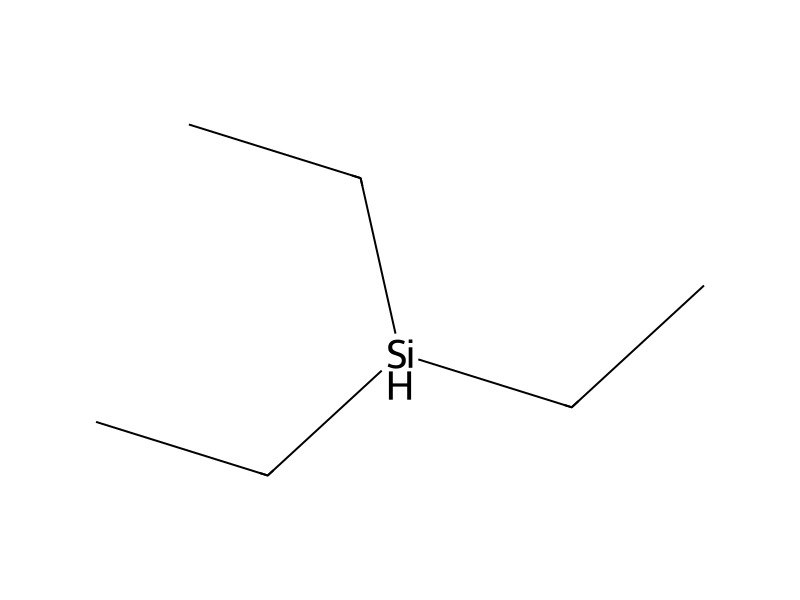
HCID 12052TriethylsilaneHCID 592717402-oxo-2-((10S,13S,16R,17S)-10,13,16-trimethyl-3-oxo-6,7,8,10,12,13,14,15,16,17-decahydro-3H-cyclopenta[a]phenanthren-17-yl)ethyl acetate

Produkt 1

HCID 534920562-oxo-2-((10S,13S,16R,17S)-10,13,16-trimethyl-3-oxo-2,3,6,7,8,10,12,13,14,15,16,17-dodecahydro-1H-cyclopenta[a]phenanthren-17-yl)ethyl acetateAusbeute 30 %

Reagenzien, Katalysatoren, Lösungsmittel 2
HCID 84599
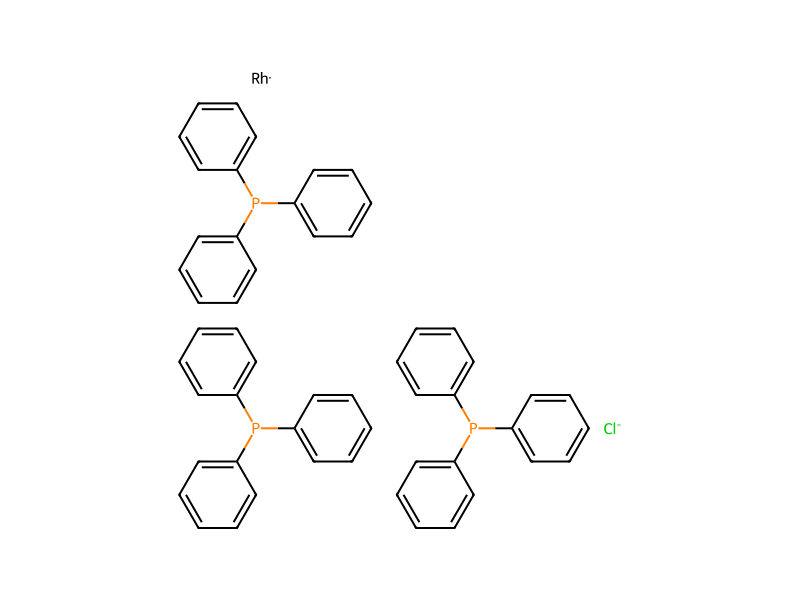
Chlorotris(triphenylphosphine)rhodium(I)
Katalysator
HCID 6344DichloromethaneLösungsmittel

Reaktionsbedingungen

Temperatur
40 °C

Versuchsvorschrift

A mixture of 3.3 g (8.6 mM) of 2-oxo-2-((10S,13S,16R,17S)-10,13,16-trimethyl-3-oxo-6,7,8,10,12,13,14,15,16,17-decahydro-3H-cyclopenta[a]phenanthren-17-yl)ethyl acetate, chlorotris(triphenylphosphine)rhodium(I) (Wilkinson's Catalyst, 480 mg, 0.52 mM), triethylsilane (1.4 mL, 1.0 g, 8.8 mM) and methylene chloride (15 mL) was warmed to 40° C. and stirred until most of the starting material was gone, as determined by thin layer chromatography. The reaction was evaporated in vacuo and chromatographed on fine silica gel (600 g) in 10-15% ethyl acetate in methylene chloride. One fraction of 700 mL was collected, followed by twelve 200 mL fractions. A 1.0 g quantity of desired product (30% yield) was obtained by evaporation of fractions 6-12. (Starting material was obtained from fraction 13, 0.7 g, 20% recovery). NMR (500 MHz, CDCl3, TMS): δ 0.68 (s, 3H), 0.98 (d, 3H, J=6.5 Hz), 1.12 (m, 1H), 1.33 (s, 3H), 1.47 (m, 1H), 1.57 (m, 1H), 1.69 (m, 1H), 1.99 (m, 1H), 2.18 (s, 3H), 2.07-2.29 (m, 6H), 2.36 (d, 1H), 2.50 (m, 3H), 2.79 (m, 1H), 4.48 (d, 1H, J=17 Hz), 4.73 (d, 1H, J=17 Hz), 5.50 (s, 1H), 5.75 (s, 1H).

Aufarbeitung

  1. customThe reaction was evaporated in vacuo
  2. customchromatographed on fine silica gel (600 g) in 10-15% ethyl acetate in methylene chloride
  3. customOne fraction of 700 mL was collected

Quellen und Nachweise

ORD-Eintrag
ord-bc64c7ac0b1349cd8e999da8741cd01e
Quelldatensatz
uspto-grants-2012_06
DOI
10.6084/m9.figshare.5104873.v1
Patentnummer
US08207151B2

Notizen zur Reaktion

Wird geladen…

Auf dieser SeiteKomponentenReaktionsbedingungenVersuchsvorschriftAufarbeitungQuellen und NachweiseNotizen zur Reaktion